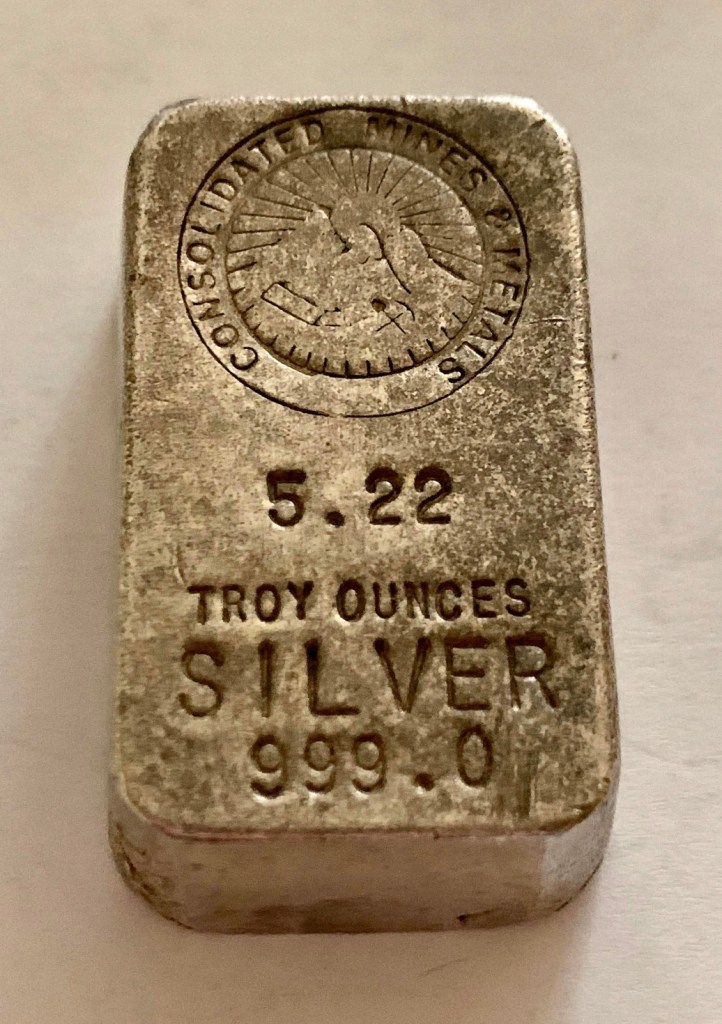
Anything made by Consolidated Mines & Metals is ultra high premium. These are pieces sought out by the most astute collectors. They came in 1, 5, 10, 25, Kilo, 50, and 100 oz. The company started in 1975 and was based out of San Francisco. The hallmark is one of the cooler hallmarks you will come across. Incredible detail and craftsmanship in the production of these ingots.
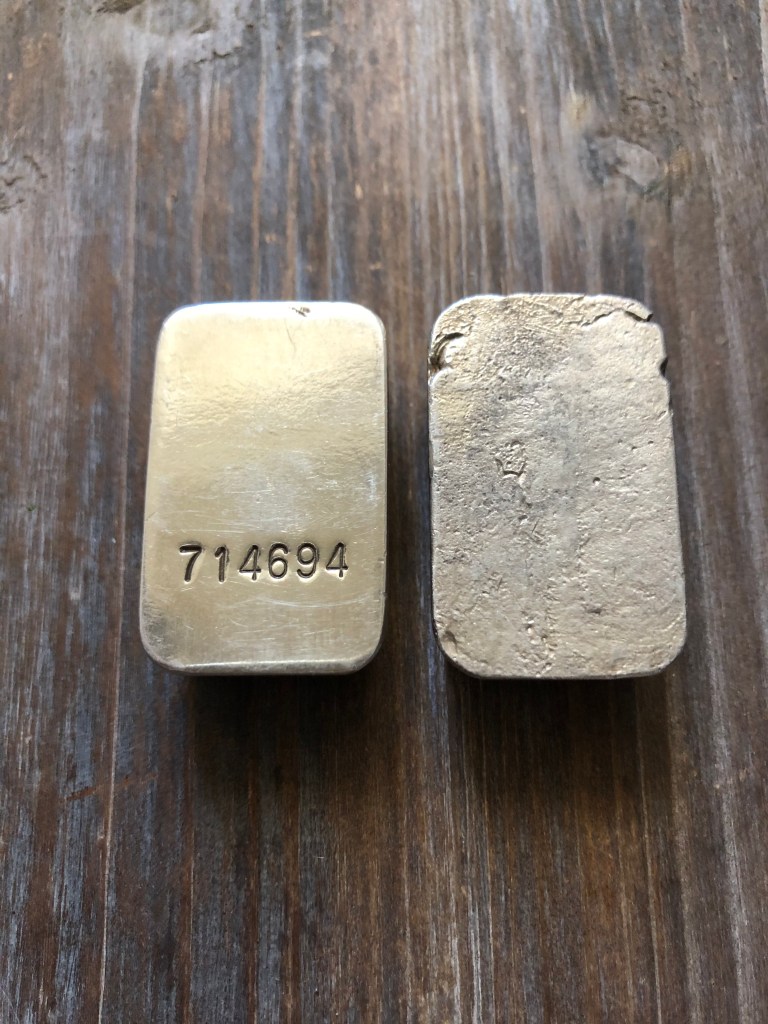
One of my prized pieces on left is a beautiful piece that looks like it was just made. Well preserved and the nicest 5 oz piece I’ve personally come across. Even weight 5 with serial on reverse. The odd weight to the right was a recent acquisition with no serial. The non-serial variety are less common. The 5 oz has estimated mintage of 1,500, but I’d be surprised if even 200 still exist.
Notice the one on left is finely polished during production and one on right has more of a poured look on reverse. Very notable differences.
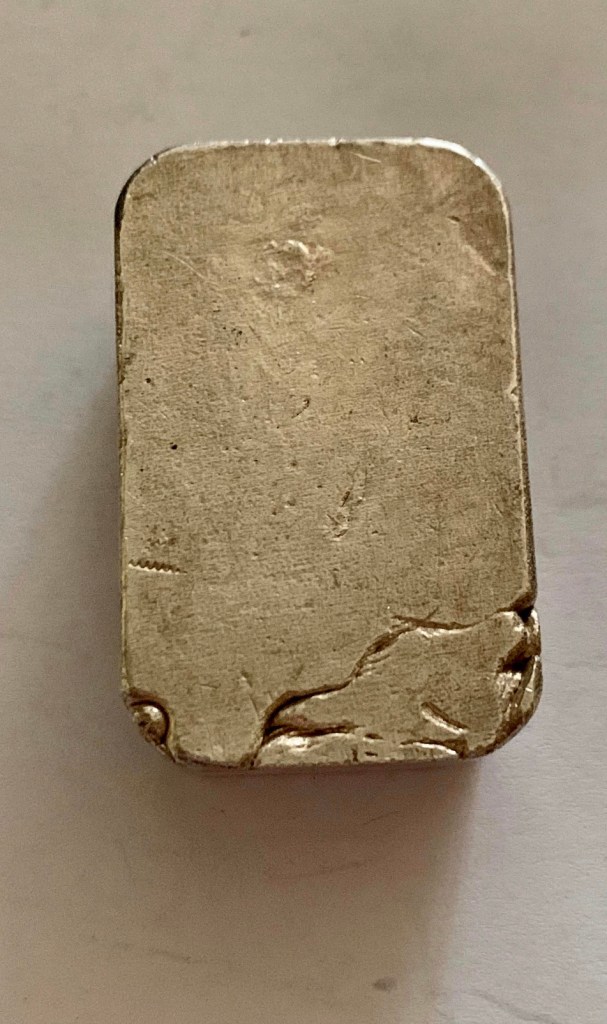
Another non serial example comes from regular contributor to this blog, Brian R. It was acquired from the same collector as my non serial above, so they share similar history.
Really nice stamp and patina on this piece.Nice pour character on reverse bottom of the bar.
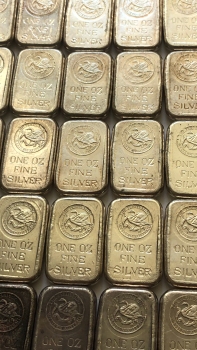
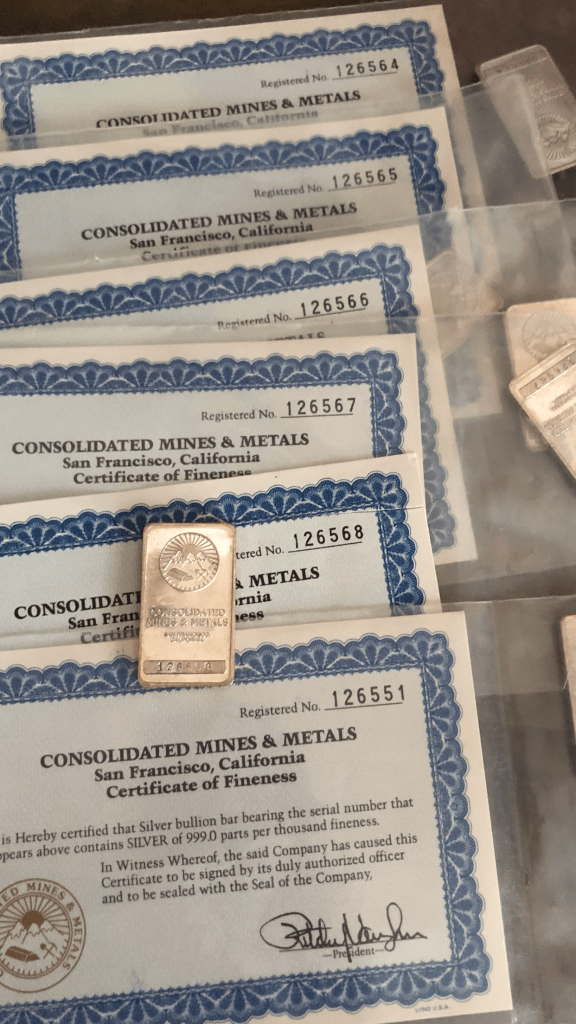
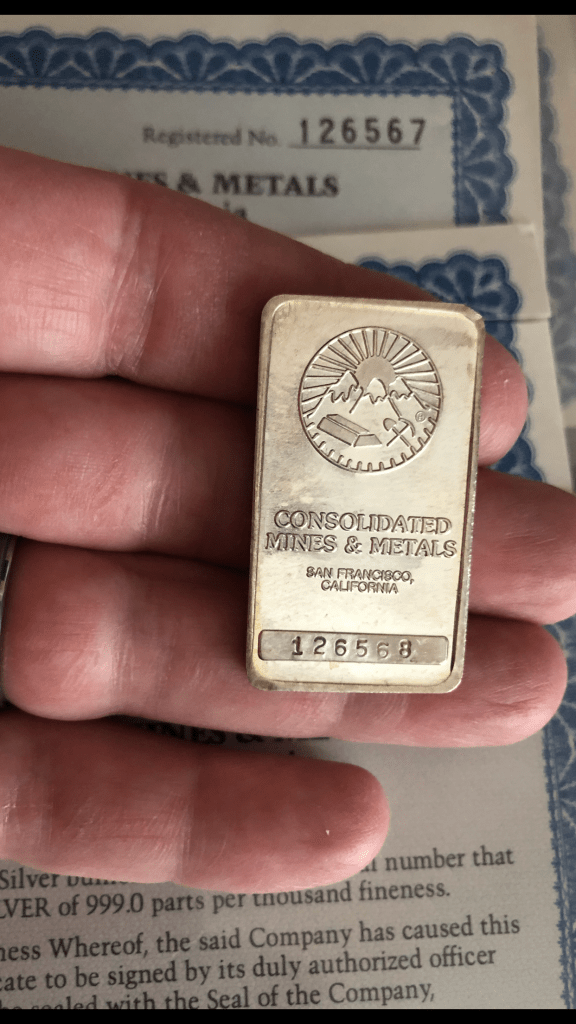
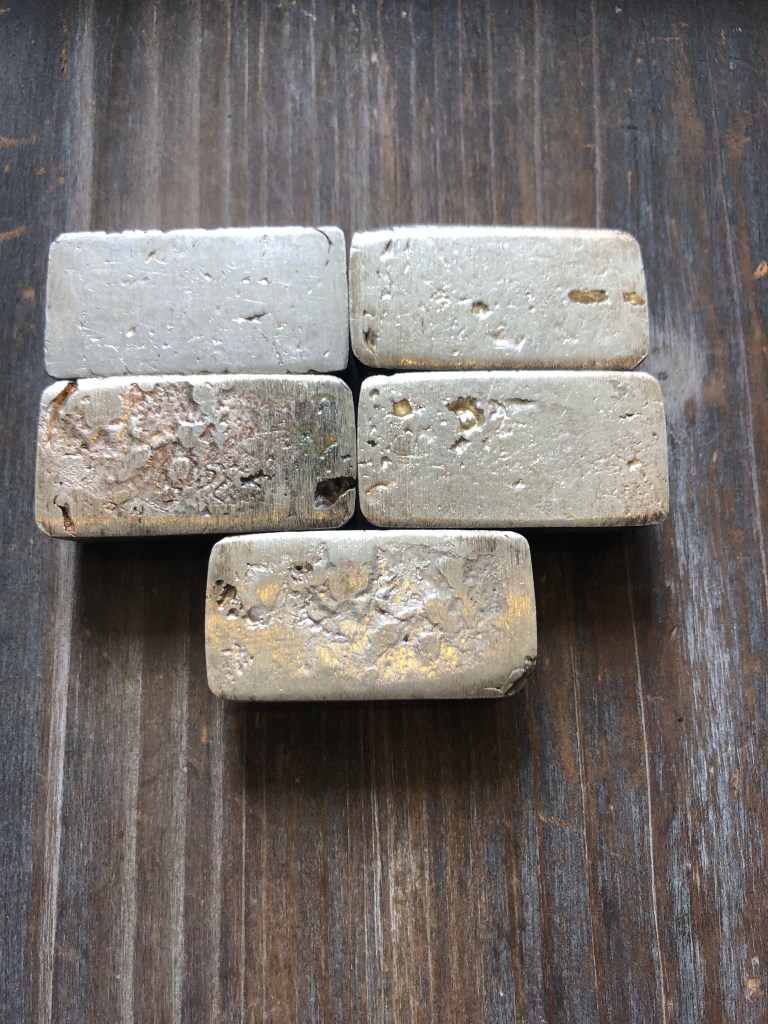
The 1 oz pressed Consolidated Mines and Metals are very scarce, even with the estimated 1,000 made, there are very few survivors. I’m proud to own a set of 5 sequential plus a 6th piece that’s not part of the set. See pics below. They came with assay paper, which I have for all of them.
These are such cool pieces. I’d like to find more.Close up of the obverse.Closeup of the reverse.
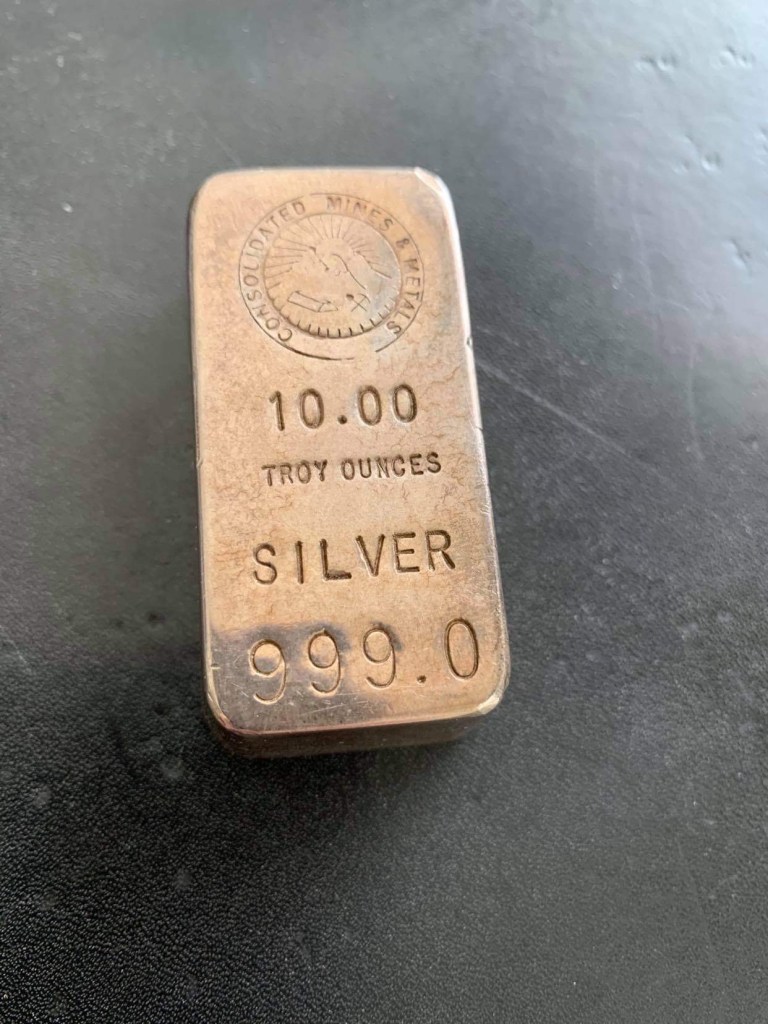
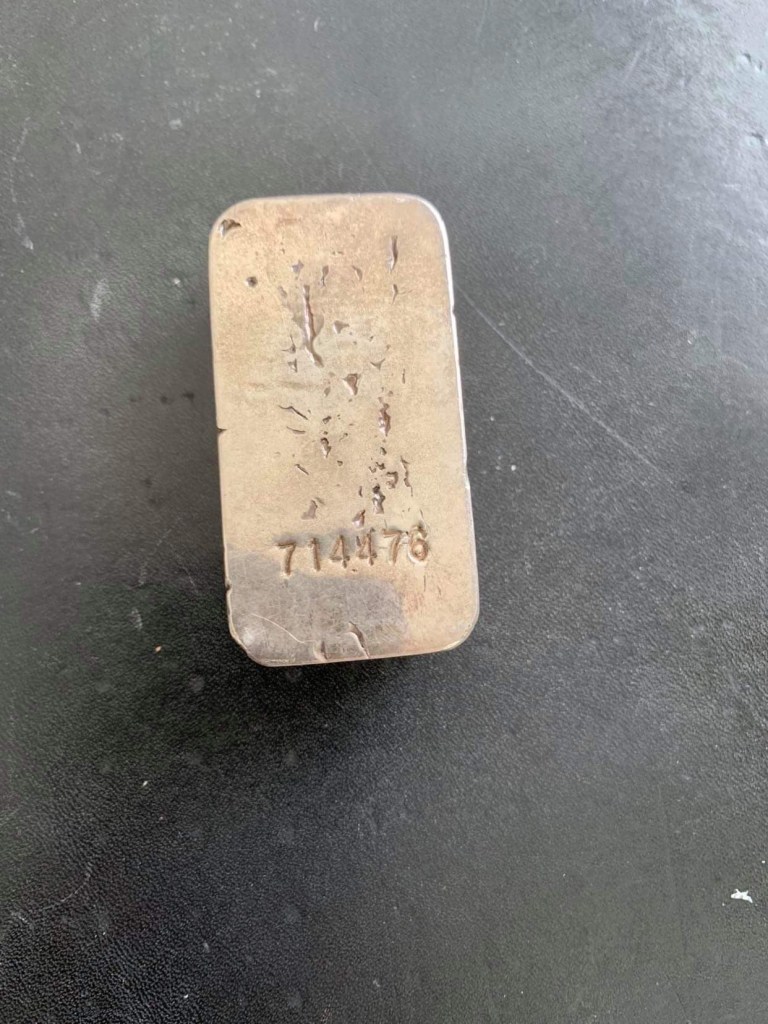
Happy to share a few amazing pieces from the collection of fellow collector and regular contributor to this site, Prashant K. Thanks again for the share of these great pieces below. First up is a very nice 10 oz example.
Obverse of the 10 oz class CM&M ingot.Reverse with serial stamp at bottom of ingot.
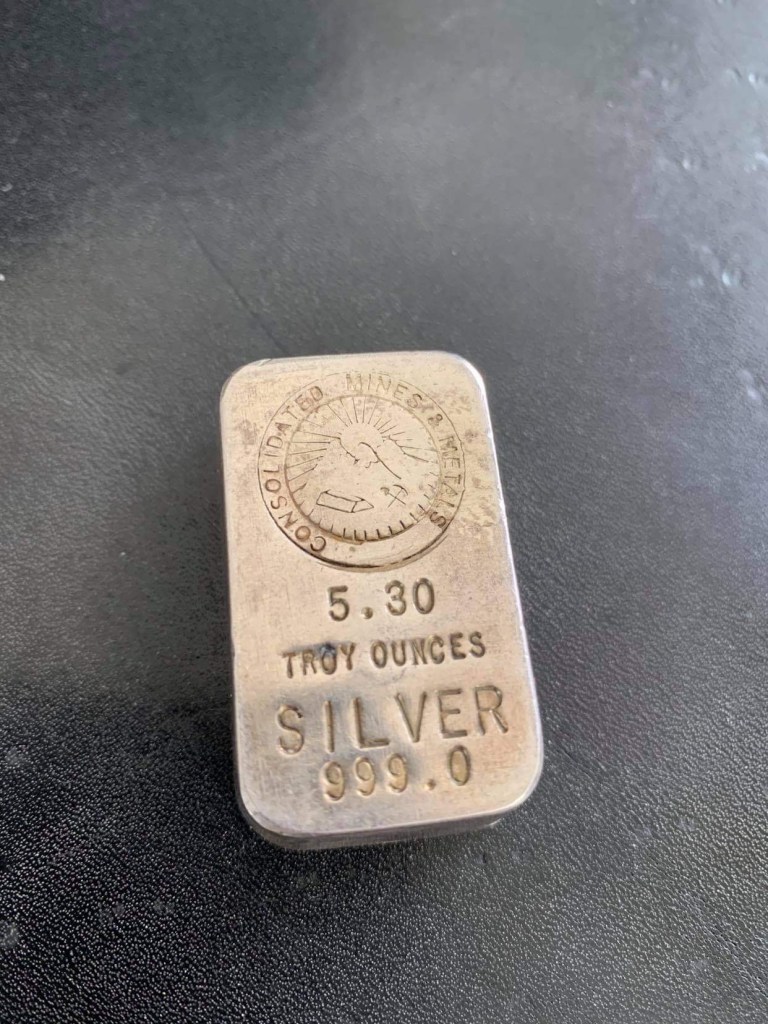
Next is another example from Prashant’s collection, a non serial 5 oz class.
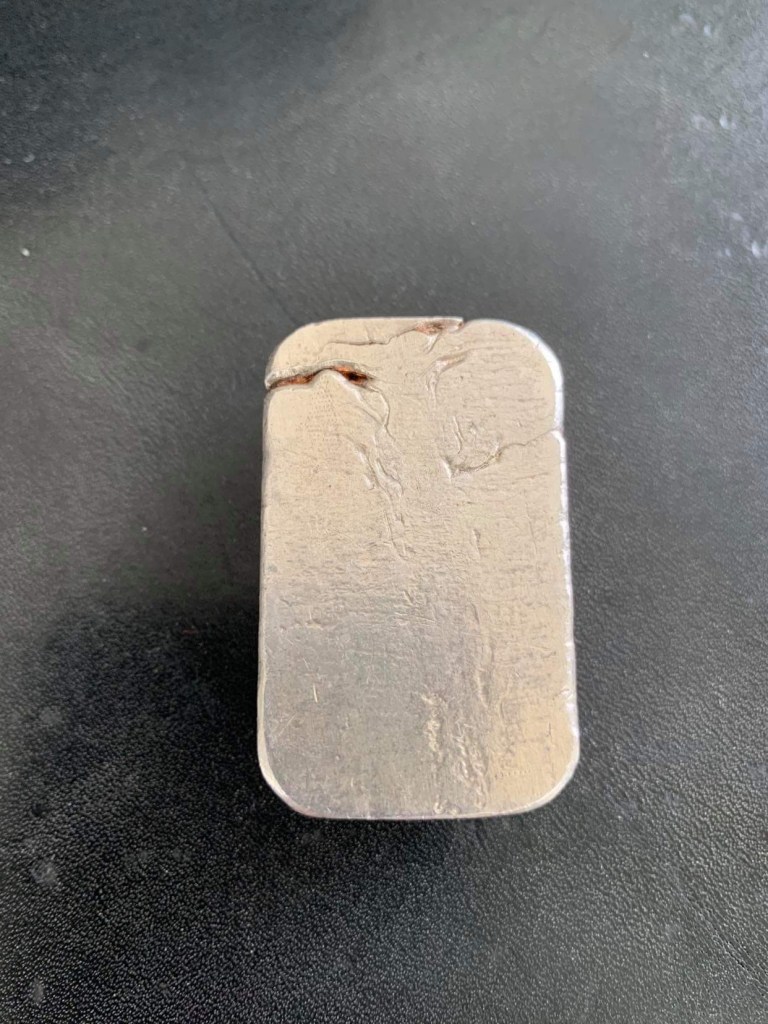
5.30 oz odd weight.Nice clean reverse. Nice pour character at top of ingot.
I remember acquiring my first Chovanak 4-5 years back. It was only the second time I had seen one and was thrilled to have acquired one. It’s also the one that got away. One thing about this hobby, is the large community of like minded collectors. We are all after the rarest and most special bars and often it leads to friendly and not so friendly competition. Another common occurrence is receiving offers out of the blue for your prized ingots. In this case, I was made an offer I couldn’t possibly refuse. I do regret parting with the piece, but was fortunate less than a year back to acquire a remarkable pair of Chovanak ingots.
The history is rich behind this old family refiner of many generations out of Helena, Montana. The family started mining in the late 1800s and produced ingots up until the early 1980s. It’s tough to put an exact date of some of their pieces, but over time there has been some distinguishing features on the ingots by era they were produced. I’m please to have a few different varieties to share in this blog post.
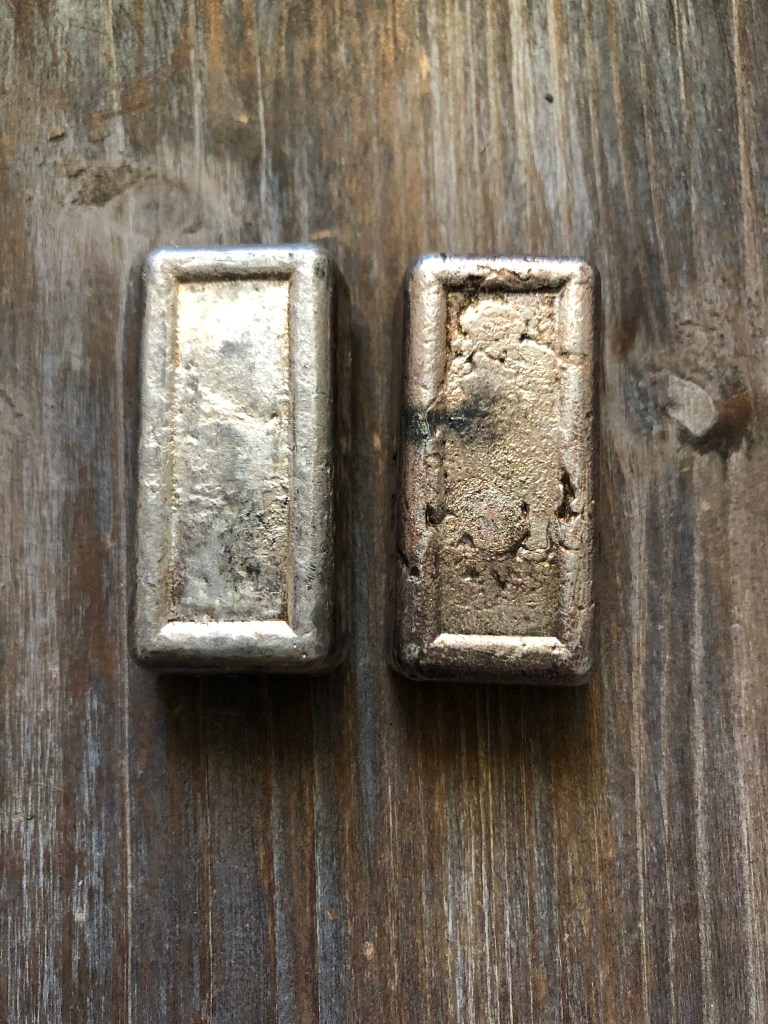
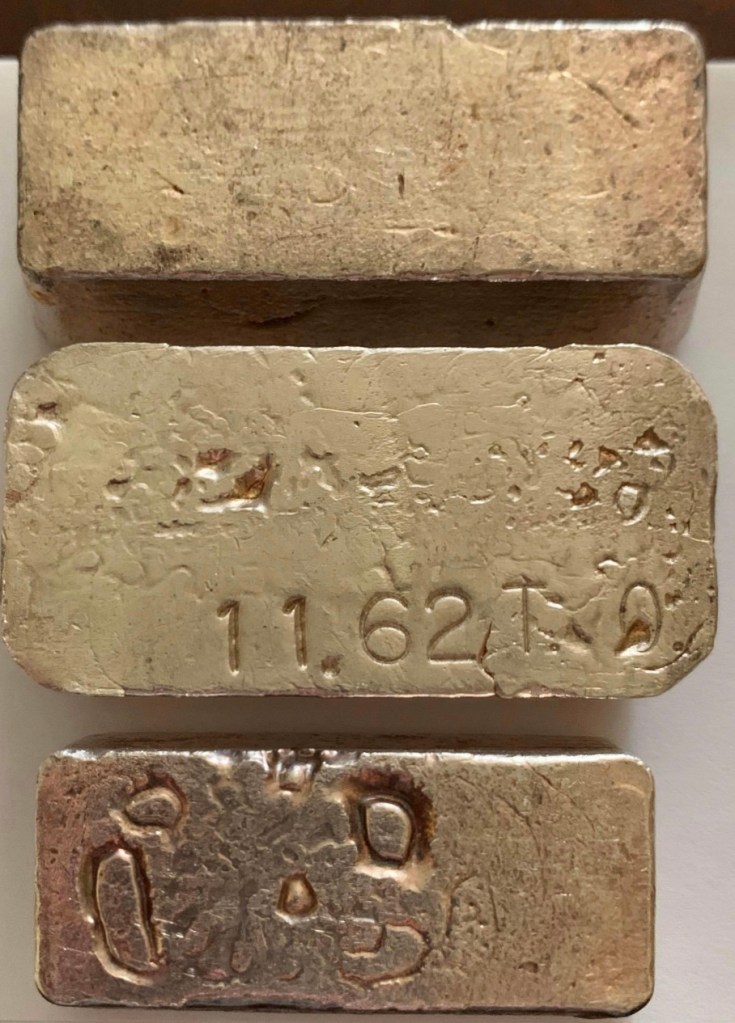
Other than the hallmark, these pieces have a lot of differences. Enjoy the pics! Known for the picture frame mold. Some ingots are stamped inside the picture frame, by the way.Note top bar above is stamped 5.0 TR O and bottom bar stamped 5.0 TR O on side. This TR O variety are thought to have started in the 60s and continued until early 1980s.
Thanks to another contribution from fellow collector, Brian R., I’m pleased to share additional images of other varieties below.
Note position of hallmark differs from above 5 oz ingots pictured earlier. Also, and unusual 6+ oz odd weight. At right is a 1 oz poured ingot. Notice that this 6 odd weight is stamped on both sides. This is extremely unique. At right, notice the weight stamp on reverse side.Beautiful, picture frame again. Tough to beat Chovanak.
Out of all the 5 oz class vintage pieces I have in my personal collection. The two Chovanak pieces I own are among my very favorites.
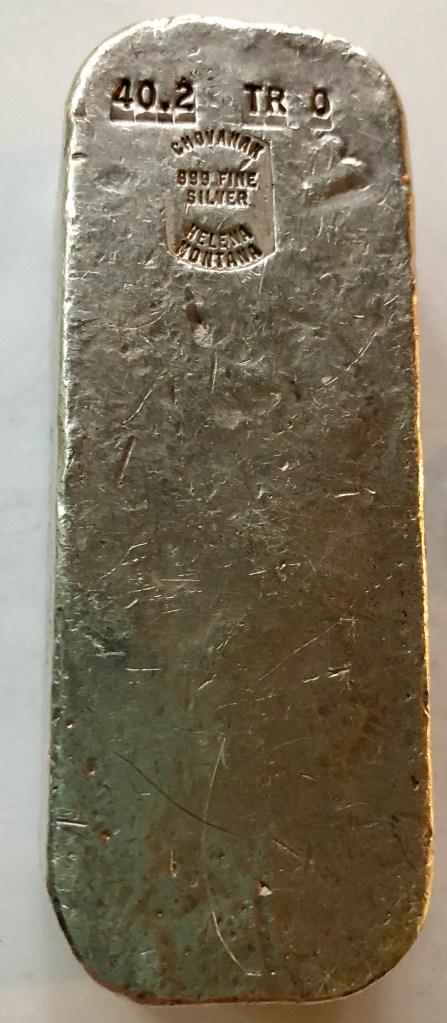
Here is a rare large class Chovanak shared by Kerry F. Really appreciate you sharing. Very cool to see a 40+ oz class piece.
This is an absolute beast.Incredible pour character.
I started this blog as a resource for those looking to learn more about vintage ingots. It’s such a vast niche within the metals world, and I wish I had this type of resource available when I had gotten started in the hobby. I hope those that visit this site will be able to come back time and time again to use the information as a learning tool. I have created tags, so that you can use the search box over time to find exactly what you are looking for on this site. Your feedback is always welcome, by the way. You may have noticed from past postings, that I don’t generally talk about valuations, but I may touch on that in more detail soon. I can also always be reached with questions about values at silverblogger@vintagepouredbar.com. Without further ado, here are some great 10 oz examples and 5 oz examples from the “C” box.
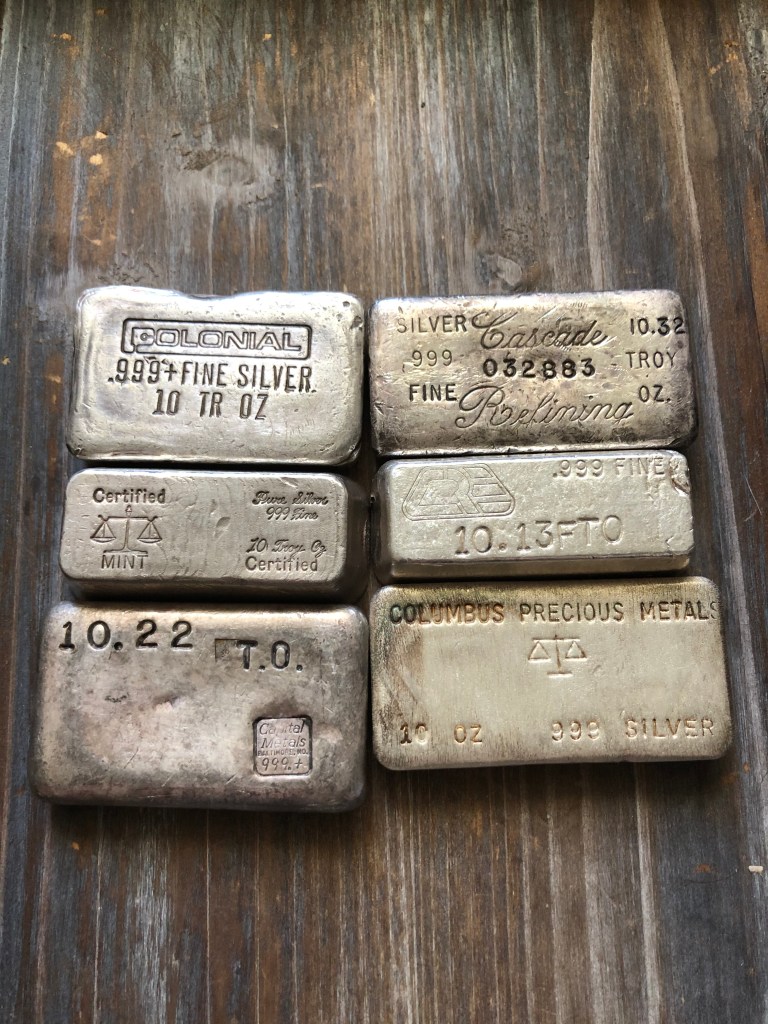
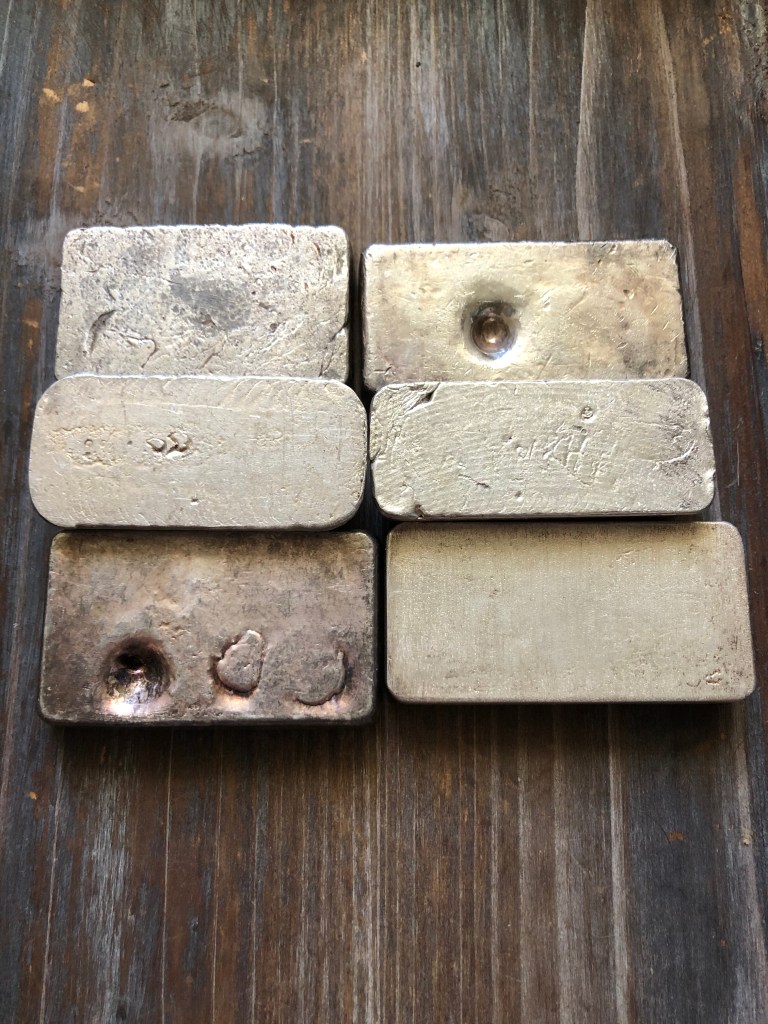
10 oz class x 6. Nice assortment. I’ll elaborate a bit below on these.The character and color on the Capital Metals ingot is tough to beat. The reverse of the Cascade Refining also nice. Love these air bubble marks that are so common on certain pieces.
Colonial 10 oz class thought to have been made by The Colonial Mint. You may recognized the name as they did some killer 1 oz commercial art bars back in the day with an Eagle Hallmark. Estimated era on these late 70’s to early eighties. I have only seen these in 10 oz class.
Cascade Refining is from Utah and one of my favorites. Love the look of this bar with the unique cursive style stamp. #032883 signifies the date of the bar, so this was March of 1983. Cascade was done in 5 oz, 10 oz, and 25 oz ingots, often odd weights. 25s are most common and 5’s are exceptionally rare and very high premium. The 10’s have appreciated quite a bit these last few years.
Certified Mint is another I have only seen in 10 oz class. Recent assay paper examples show this refiner operating out of Phoenix, AZ in the early to mid 70s.
CRE is an interesting piece. The company was Commodity Resource and Environmental out of Southern California, which started as a silver recovery company in 1980 and still in business today. I’ve come across 5 or so of these over the years. Not a common vintage bar by any means.
Capital Metals out of Baltimore, Maryland is a neat piece. These are not uncommon, but carry nice premiums. This is what I call a value vintage buy, as you can still get these without breaking the bank, but they will appreciate. I’m trying to add more to the collection. If you are lucky another to find with with a Deak counterstamp, you are in the money. These are very high premium varieties. They primarily are found in 10 oz poured class, but there is a 10 oz extruded version and also 25+ oz class poured variety.
Columbus Precious Metals is out of Columbus, Ohio and uses the same mold as Jackson Precious Metals (JPM), which is more commonly found. Notable examples of these bars are Allen’s Coin Shop, Silver Towne, Bache, Xenia Coin Shop, Lexington Silver Shop, and Pilloli’s Youngstown, Ohio. I am missing the Pilloli’s piece, so let me know if you see one for sale :)!
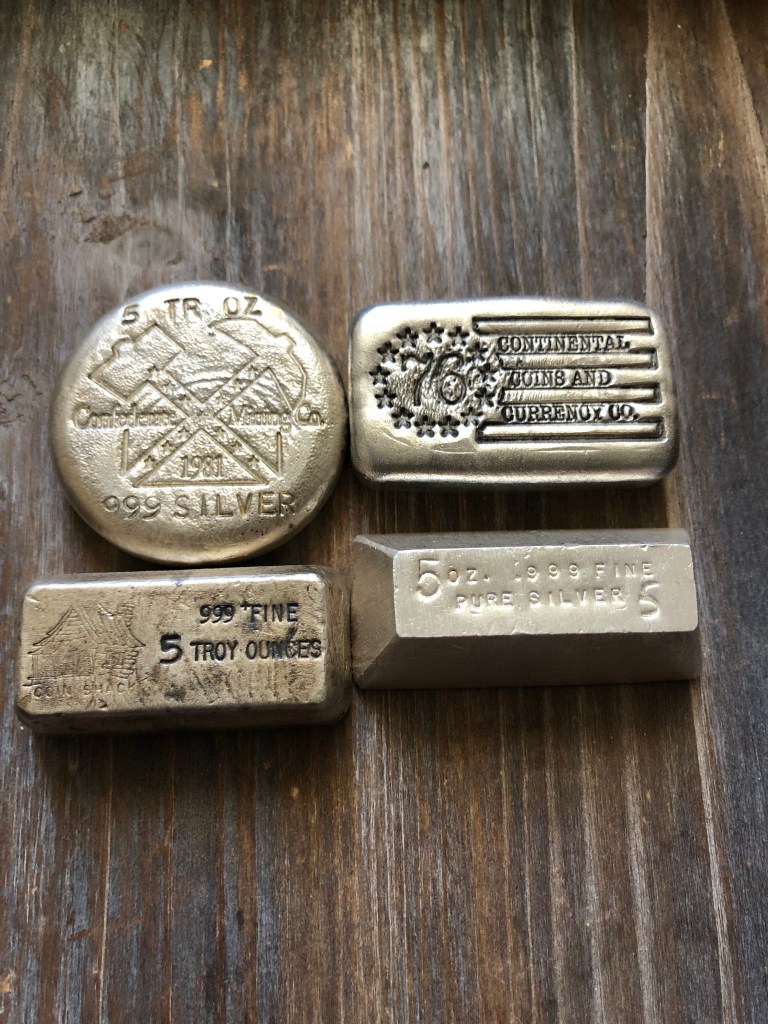
Some 5 oz class “C” box examples.Reverse pics of the 5 oz class pieces above.
Confederate Mining Company 5 oz class. Made in 1981, in stylish button variety. These have become next to impossible to find. They came in 5, 10 and 25 oz class. They are ultra high premium if you do find one for sale. Not a lot known about the company, but I did track down a company in South Carolina called Confederate Mining Company that is still in business today.
Continental Coins and Currency Company out of Southern California. This 76′ bar is pretty cool and I’ve come across maybe 8 of them ever. I believe this to be the same Continental Coin that you have seen stamped as CC counter stamped on the W.H. Foster extruded 10 oz bar, and the 10 oz US Assay pressed bar out of San Francisco in the early 80s. I’d like to find out definitively, but this is my hunch.
Coin Shack 5 oz. This is one of my top 5 rarest 5 oz pieces. The company I believe is affiliated with Doyle’s Mint and was founded in 1969. They did business out of Hemet, CA. This style of mold is known as the “Doyles” mold an there is a set that is very tough to complete in this variety, including Regold, RCG (Riverside Coin and Gold), Doyle’s Mint, Omega (M&B Mining), and Nevada Coin Shop to name some of the more notable in the group.
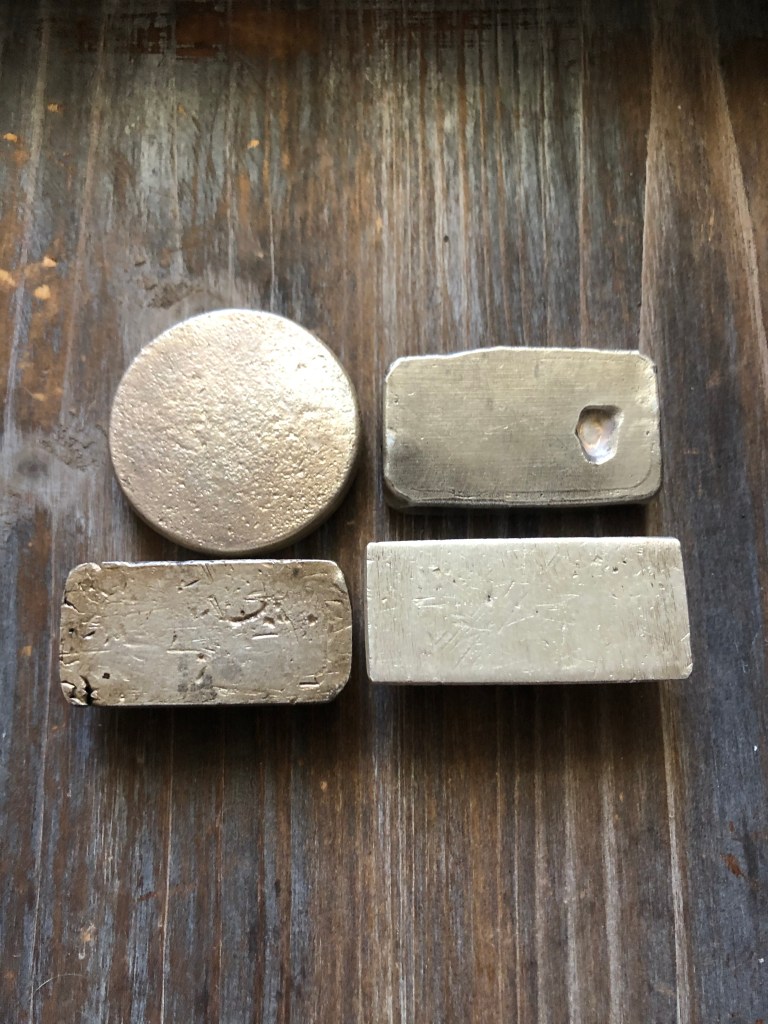
Circle City 5 oz class. More rare in 5 oz versus 10 oz. These were done out of Arizona. Cool trapezoidal shape and one of the more unique shapes as far as ingots go. I have a 10 oz example, as well. It’s the same shape and look.
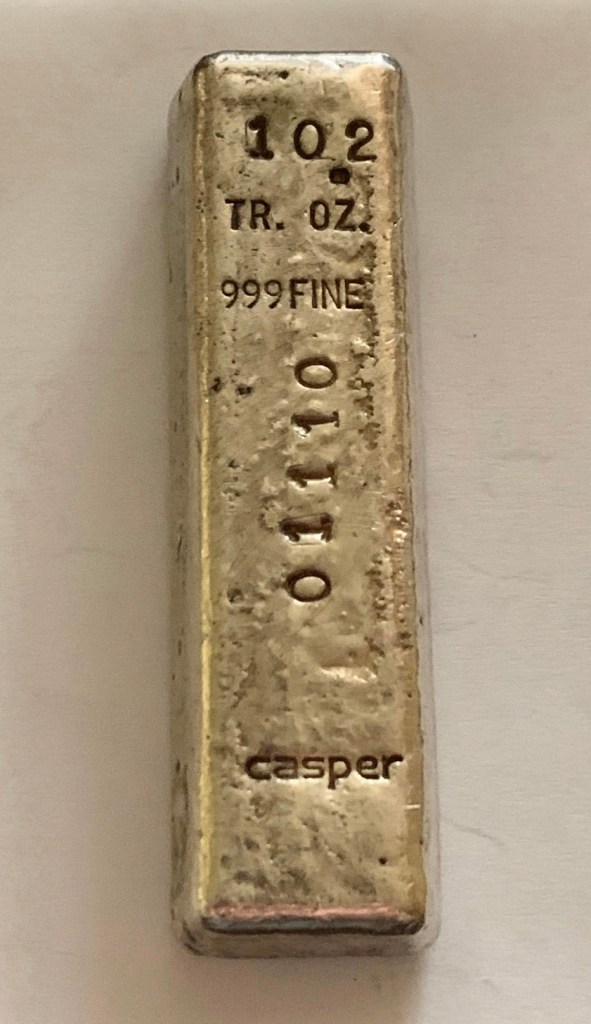
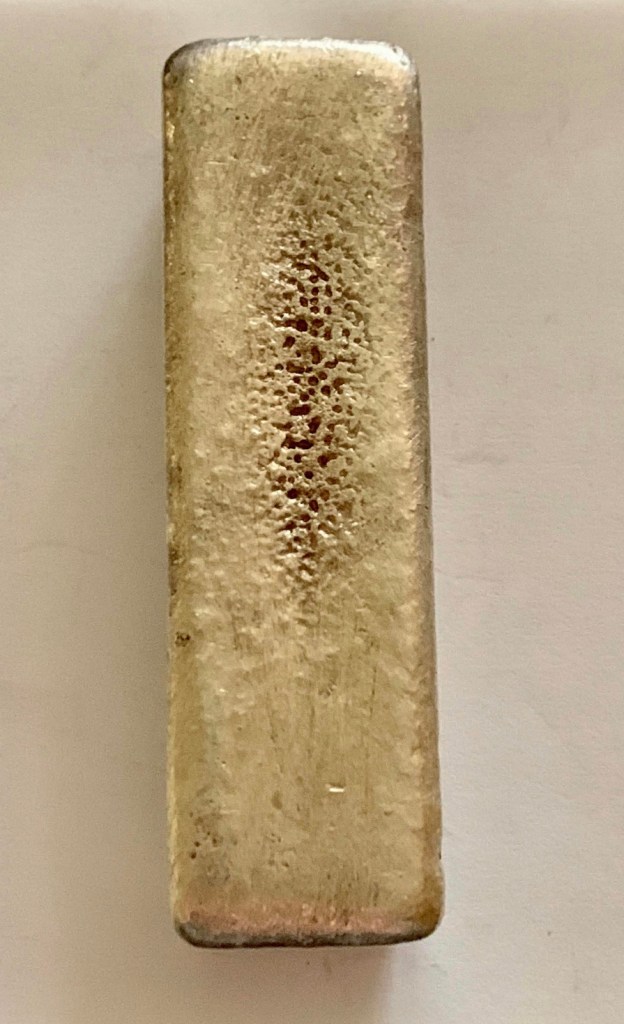
Here’s one you will rarely see, a 10 oz Casper courtesy of my buddy Brian R., who is a regular contributor. Thanks for sharing your collection buddy!
Just a beautifully designed and poured ingot.Killer patina and character.
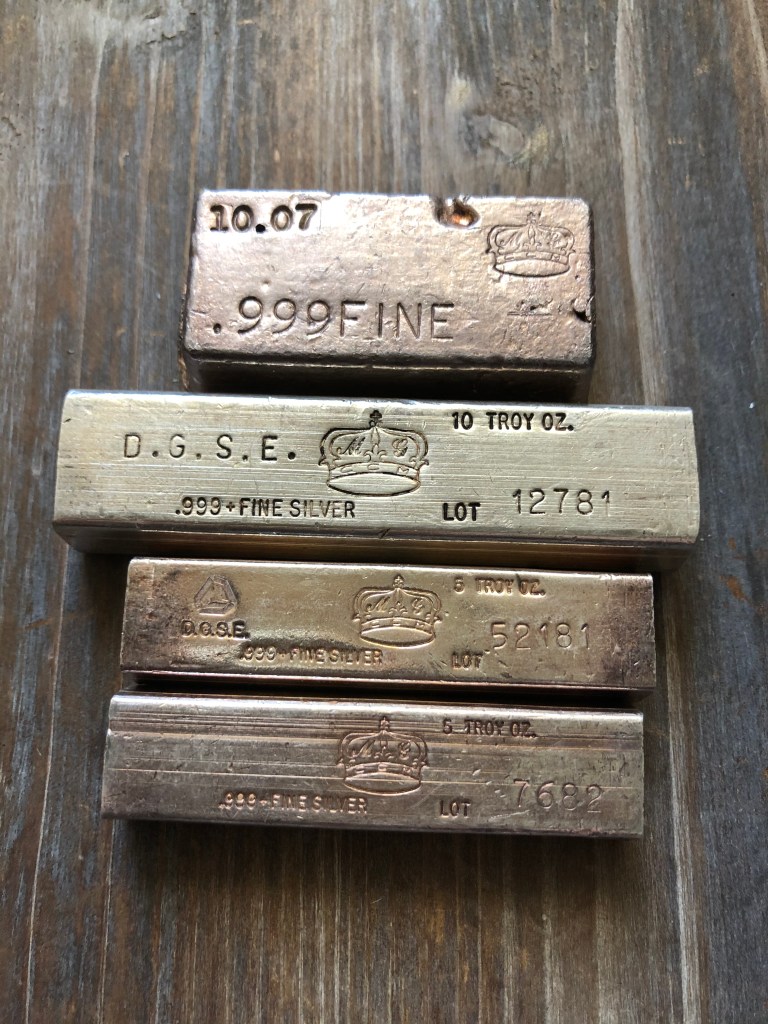
When I started my vintage journey about 6 years back, California Crown Mint was among the early vintage pieces I acquired. Otherwise knows as CCM, these ingots were produced in higher volume, but disappeared during the “Great Melt.” Their commonly found in kit kat style, predominately 5 and 10 oz, but they also did 25-100 oz which are less commonly found these days. They have a great hallmark of a crown with the initials M and G in the crown. For those who don’t know, these are the initials of the former President of CCM, Michael Graham. The company began in 1980 and put out a lot of bars their first few years. Not much information can be found after this period of time. One of my favorite CCM pieces is an ultra rare poured 10 oz class bar. I’ve come across 3 in all my time collecting. CCM also made bars for various resellers as you can see by the example below, DGSE (Dallas Gold and Silver Exchange). The serial number also happens to be the date the ingots were made, so in the case of the 10 oz bar pictured, the #12781 signifies December 7th, 1981. Pretty cool.
My humble collection of CCM pieces. The toning on the 10 oz pour is incredible. Pics don’t do it justice. Notice the line on the bottom 5 oz example. This characteristic can be found on may extruded examples.
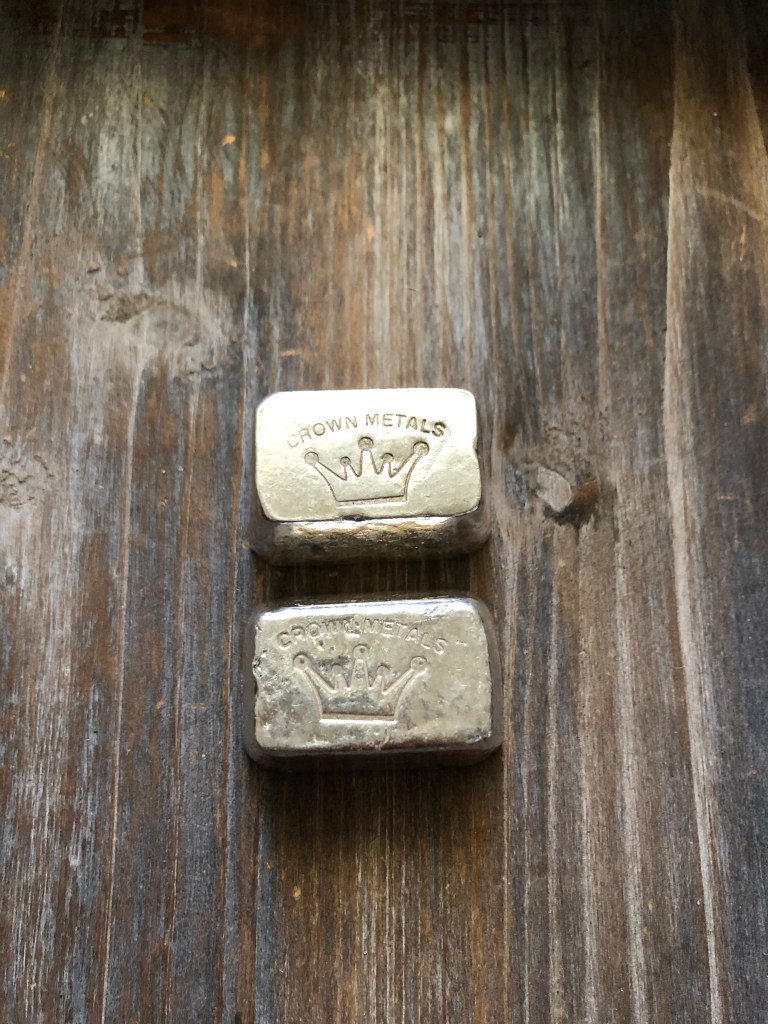
Just something about this hallmark, made me want to kick off the “C” box with Crown Metals. Their signature Crown stamp is among the best out there in my opinion. Simple, yet edgy. It’s a crown fit for a King. They are out of Canada (I believe Ontario), and are a scrap metals company that no longer pours ingots. Timeframe on these by appearance, looks to be early 80s give or take a few years. They are rarely found anymore, but more commonly found in 5 oz class. The other sizes that have come up are 25 oz, which are very very rare. Enjoy the pictures below.
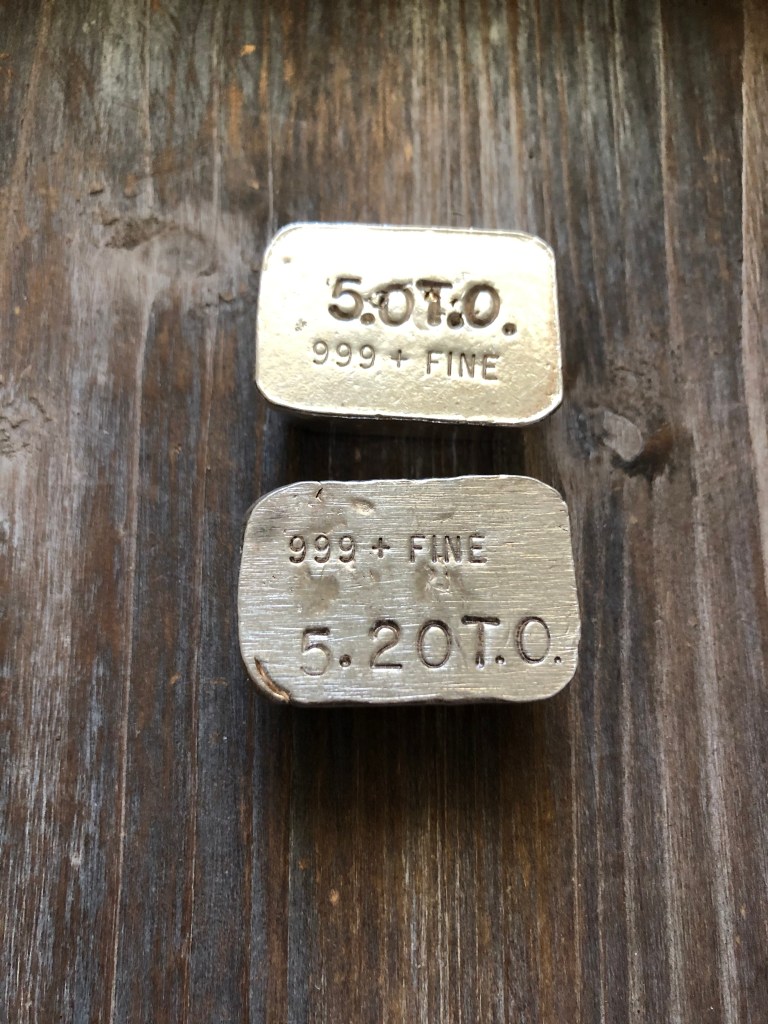
Keep in mind these are decades old, so finding in perfect condition is next to impossible. The top ingot is pretty darn close to perfect. Reverse shows slight difference, with weight stamp and purity stamp in different places. Not uncommon to see this with old pours. Bottom ingot is an odd weight.
Very excited to share an example that was sent to me by my buddy Brian R., who acquired a rare 25 double hallmarked Crown Metals ingot recently. Stunning piece.
Serious chunk of toned beauty here. Very tough piece to find.Nice reverse, excellent condition with toning around all edges.Crazy rainbow toning on edge. A thing of beauty.
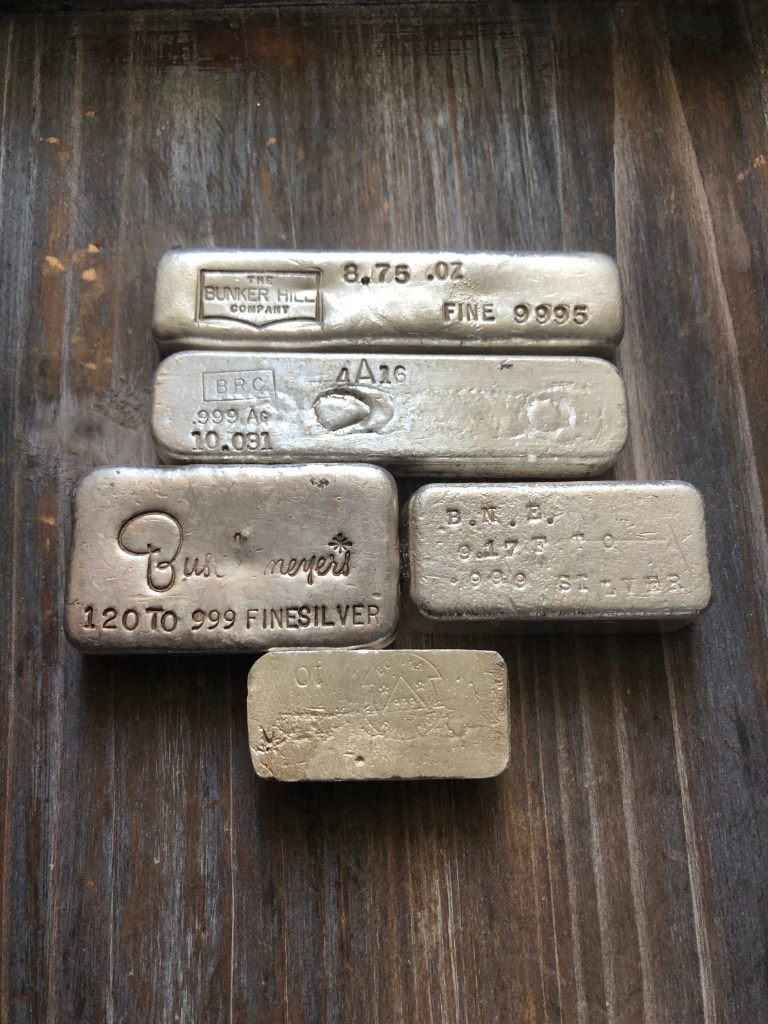
Bunker Hill Company is the highest premium of this bunch. They were a notable refiner out of Idaho between early 60s and early 70s. This example is #80 which is stamped on the side outside edge of the bar. This variety has an estimated <500 examples made. Bunker Hill pieces came in 1 oz up to 100 oz size. More information can be found at allengelhard.com for history and varieties, estimated mintages, etc.
Bahamian Refining Company, interesting bread loaf style with serial/lot number stamped top center. Not much is known about them, other than they were an incorporated company in Arizona, operating in the early 1980s. I have a few interesting 1 oz pieces that I’ll post in a blog on “silver smalls.”
Buschmeyers 10 oz class. These are affiliated with the same company WGB (W.G. Buschmeyers). Very cool and highly collectible pieces. You can see my example is a 12 oz piece. They forgot to stamp the decimal. Should be 12.0. This was common with old pours. Many believe these omissions are errors, but they are not. These were hand stamped and there are many examples of slopping stampings from refiner to refiner.
Bitterroot Nugget Exchange is a rarely seen old poure out of Missoula, Montana. Montana had some great refiners, notably Chovanak, who many serious collectors covet. This BNE is a classic old pour style. I’ve come across less than 5 ever like this.
Lastly, and one of my favorite 5 oz from the “B” box is Bojuka Ryu, that was 70s era out of Marina, CA. In 1970, a small karate club was founded in Marina, CA. It grew fast and in 1974 changed its name to Bojuka Ryu. Bo stands for jujitsu, particularly Danzan Ryu Koden Kan jujitsu. Ka stands for karate arts. This one is #10 serial number. Iv’e come across one other. These are scarce and the type of pieces that make collecting ingots really fun.
Adding another fantastic example of a Bunker Hill ingot, shared by Brian R.
15 oz class specimen. Great stamp.Purity on reverse.Serial number 20. Awesome bar!
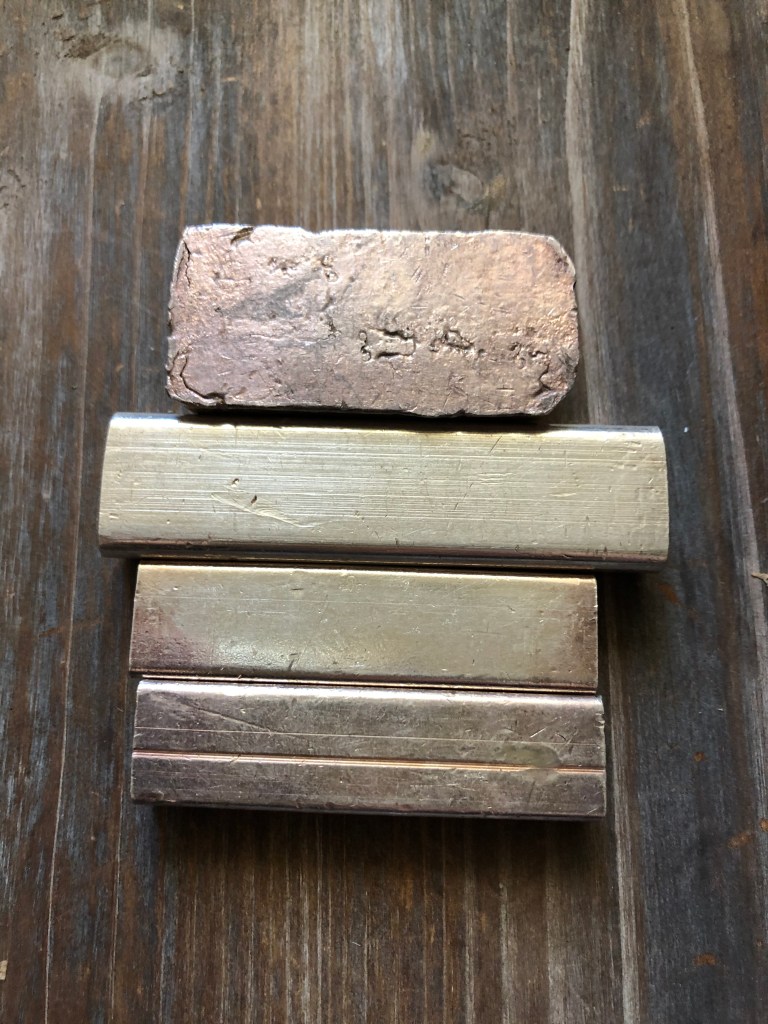
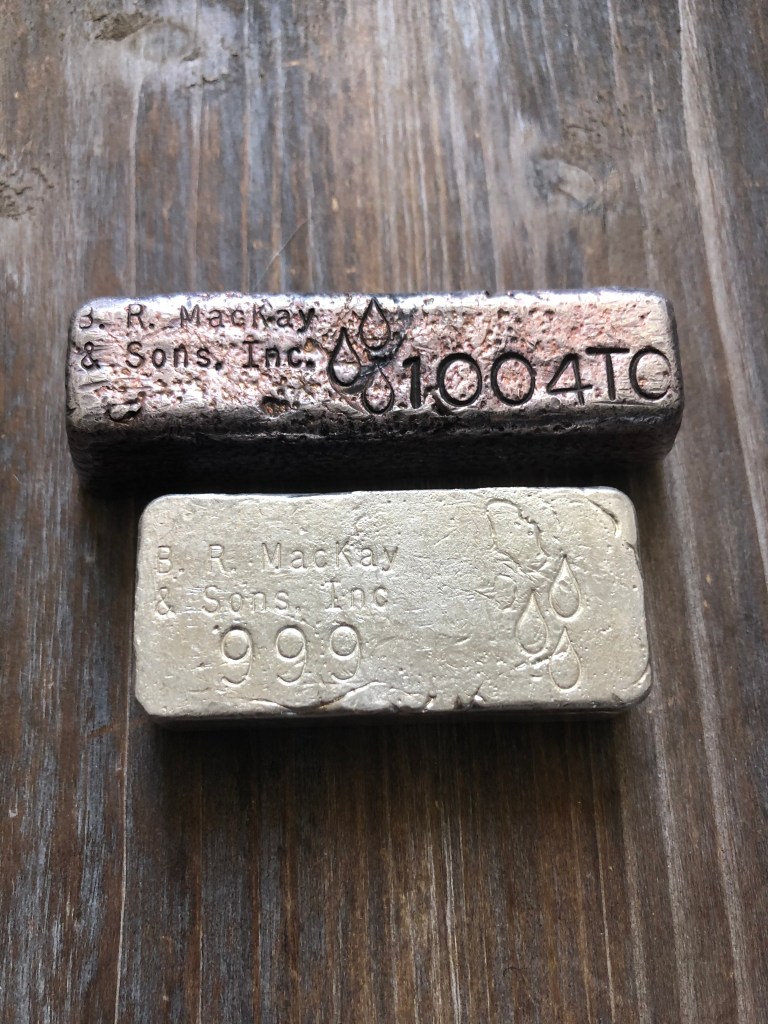
B.R. MacKay & Sons are highly collectible old pours that came in many sizes, typically 10 oz class and above. They have the distinguieshed 3 water droplets for a hallmark as seen in the below examples. They have an interesting history to say the least. They were a refiner out of Utah and refined silver from used x-ray slides and other film products. In 1983 the owner was indicted on manslaughter charges after an employee died on the job from cyanide poisoning. At that time there were many refiners operating without strict safety protocols. This incident brought change to the refining industry as it related to safety and compliance.
Top example is a rare skinny bread loaf 10 oz odd weight example with incredible toning, almost a pinkish hue. The bottom bar is a bit more commonly found mold. These bars have become scarce with all the new collectors entering the hobby of the last few years.Not many out there have the swirl lines like this 9.19 oz example.
Here’s a few more examples to share courtesy of regular contributor Brian R. Thank you again for sharing these.
I really like the 10.40 oz pictured at bottom. It’s one of the better examples I have ever seen. The color and character on the 10.4 oz (bottom pictured bar) is just fantastic.
Brown Materials Co. out of Oklahoma is one of the “B” refiners that are highly collectible and particularly scarce. Pictured below are 3 varieties, a 1st generation 10 oz and second generation 10 and 5 oz. Notice the similarity of mold with Golden Analytical 10 oz? They are the same exact mold and weight/purity stamp. The Brown Materials 5 also shares a similar molds with the GA 5s. I will be sharing examples of all GAs when we get to the “G”box.
The 5 oz is very rare in the second gen. I don’t believe there to be a first generation 5 oz, however. The bar on the right is a first generation 10 oz and extremely rare with ultra high premium.
Reverse image of the Brown Materials bars.
Here are a few beautiful examples of 10 and 5 oz class Brown Materials ingots shared by Brian R.
Killer toning on both pieces, along with strong hallmarks. Fantastic!Reverse pics. Great duo here!
Update to this post, I was finally able to acquire a rare skinny 5 oz variety Brown Materials ingot. Only a handful of these are known to exist.
Great example and couldn’t be happier to own this. Nice patina and lines on reverse.
I recently acquired a new piece from this old refiner that has a special place in my collection. The 22.54 oz is my favorite large bar in my collection. The hallmark is spectacular as is the shape, size, etc. Great in hand. ASR pieces are more commonly found in 10 oz class, but even 10’s don’t come up often. The 1 oz pieces carry the highest premium. I’m still looking for that 1 oz piece!
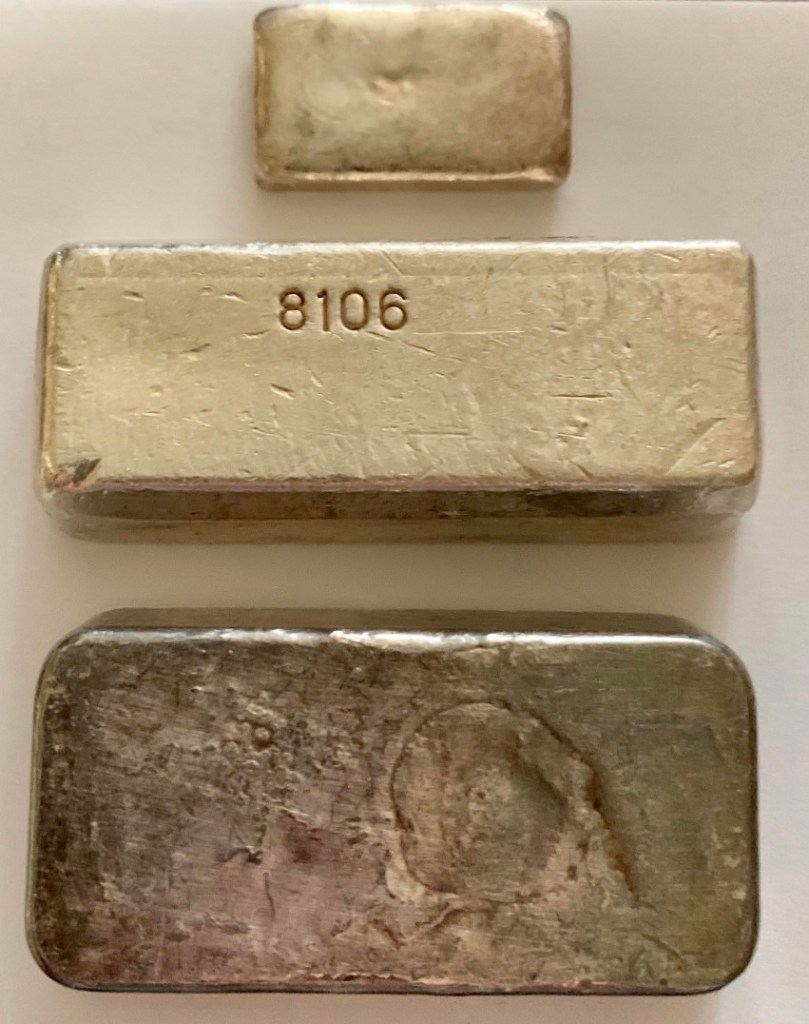
10 oz has a lot number on the obverse. The 22 oz shows serial on reverse. Long serial number on the 22 oz piece. Purity is stamped 999 fine on the side, but not visible above.
Here are a few additional examples of ASR ingots in different sizes and varieties. Thank you to Brian R. for sharing these.
Really pleased to be able to show an example of the small 1 oz ASR above. Very tough bar to find. Also note the 10 oz lot 8404 is the same lot # as mine pictured above in the first photo.Note the middle ingot has a lot number on the reverse.
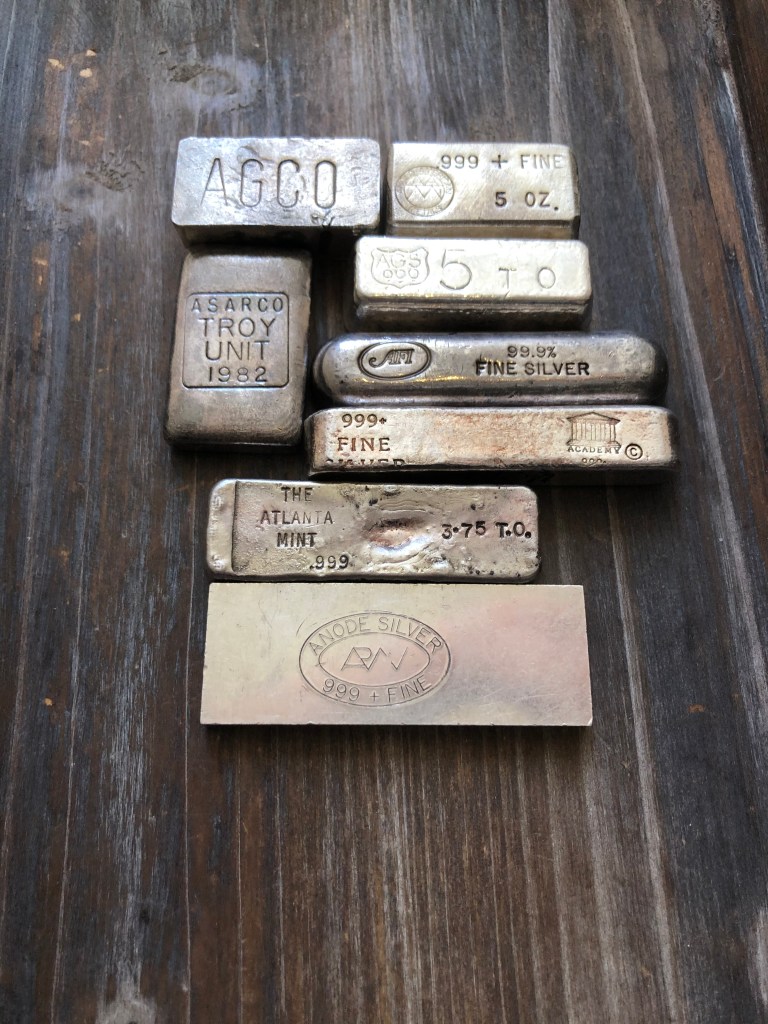
Just a few goodies to share from the 5 oz class. Note the different shapes and sizes, types of molds, etc. All part of the fun of collecting. 5’s are primarily where I have focused my attention of late, but I have a fair amount of larger vintage pieces. We always say we are going to focus on one genre, but collecting silver ingots is highly addicting and it’s hard not to buy larger bars when you come across any vintage pieces. They are all drying up and getting harder and harder to find. Collector to collector transactions are where I’m finding the vast majority of my new additions. I can say this is true for at least the last 1-2 years.
The Asarco is far and away my favorite in this picture, but the Anode extruded and The Atlanta Mint are extremely scarce. I have only seen one other extruded Anode bar and have not seen another Atlanta Mint pour like this.
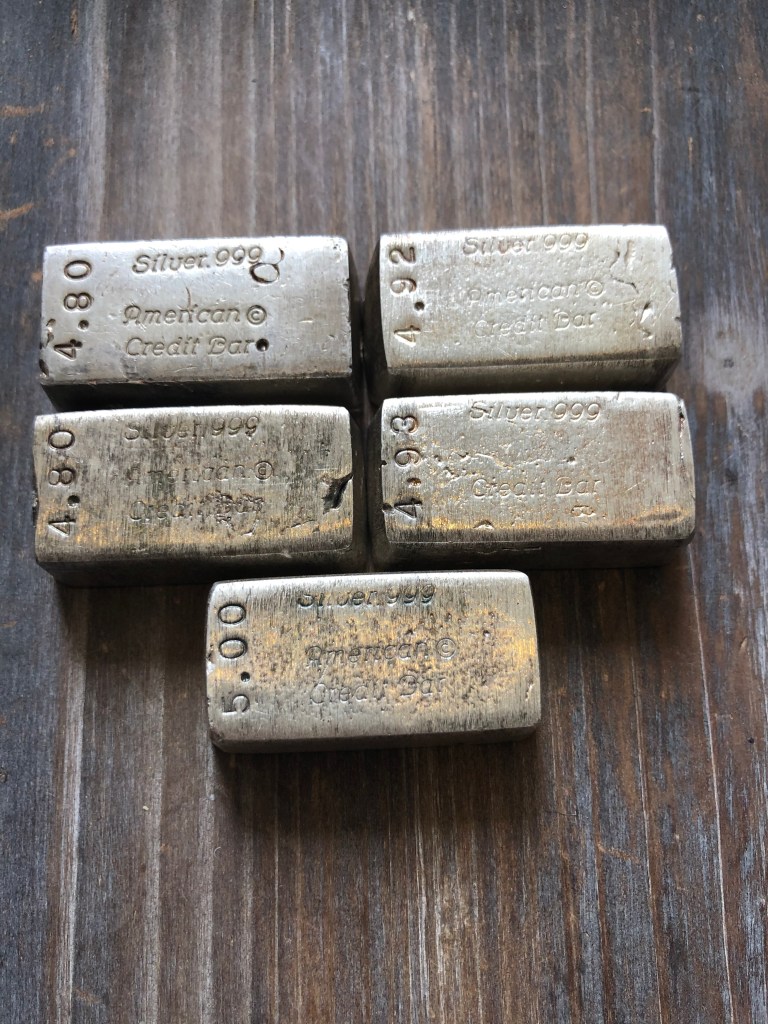
Update to the “A” box is a nice family photo of 5 oz class American Credit Bar ingots.
Great little bars with nice patina and 4 sub 5 oz weights represented!The character on the 4.8 pictured on left side middle is second to none.













 Vintage Silver Bars