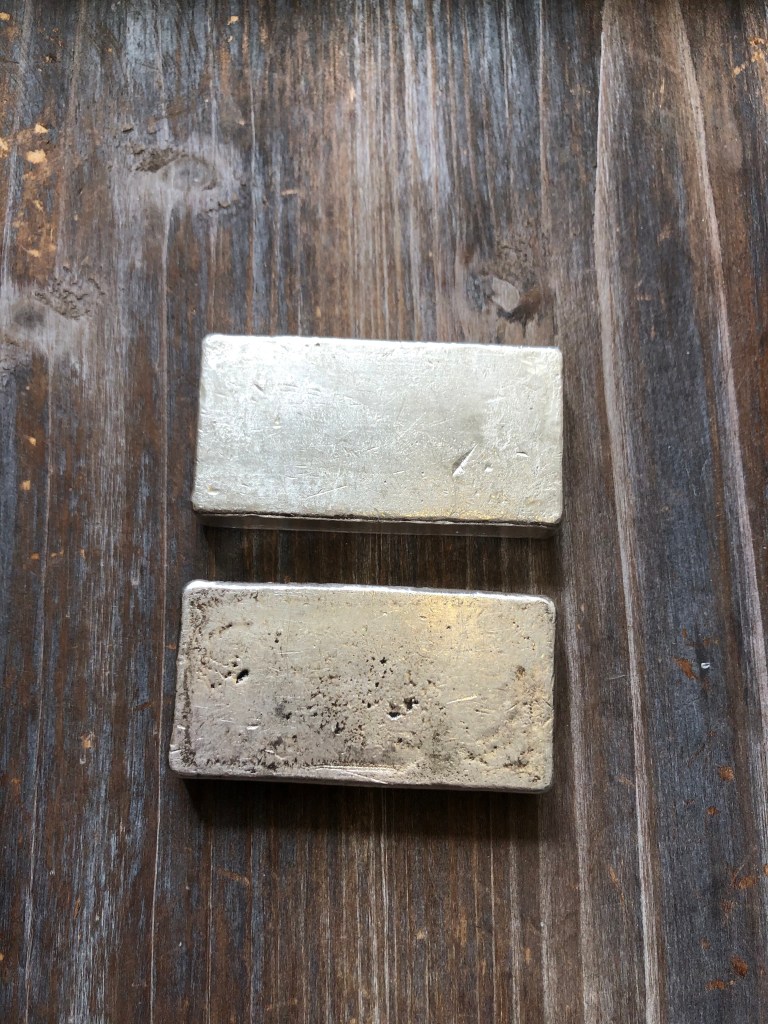
After conducting research on the origins of these ingots, I believe they are from E.D. Marshall Jewelers out of Scottsdale, AZ, who have been in business since 1971 and still have a chain of stores in AZ to date. It’s the only E.D. Marshall I could find that fits the profile, so I’m placing a high likelihood that it’s them. For those that collect bars from this sought after hallmark, you will know that the Sandoval Jewelers ingots in 5 and 10 oz are identical. I’m convinced that E.D. Marshall made these for Sandoval, which was likely a related operation in AZ. The premiums on both refiners are very high. The 5 oz E.D. Marshall is about as scarce as it gets, along with the Sandoval 5 oz.
This 5 oz example is an absolute gem.Stunning reverses on both ingots. The 10 oz has a pinkish hue forming on top left. Absolutely fantastic.
I wish I knew more about Electrum. These are scarce pieces that came in both kit kat and poured variety. I have only come across this one kit kat and jumped at the opportunity to buy it. If you have looked at California Crown Mint kit kats you will notice that both the purity stamps, weight stamps and lot number stamps appear to be identical. I think that it’s possible that CCM did these bars for Electrum because CCM has dated bars at the exact timing of this date below. For those that collect kit kats, enjoy this one.
Love this hallmark with the scales. A lot of similarities to the CCM 10 oz. The lot number appears to be a date of 8/9/82. Reverse pic.
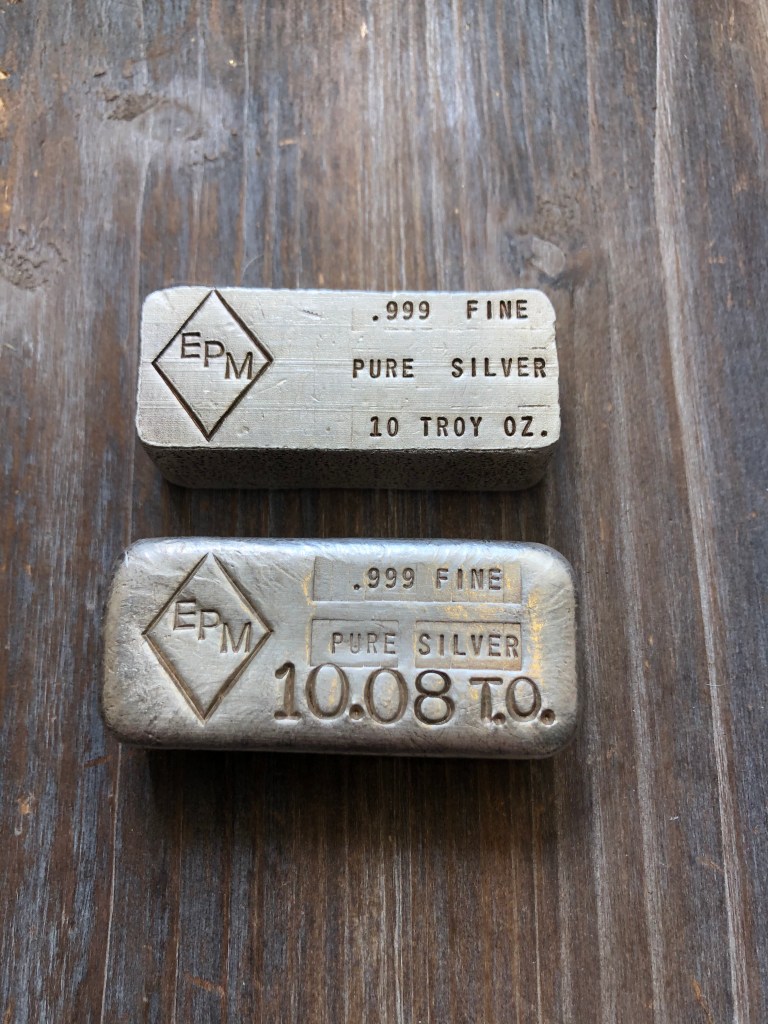
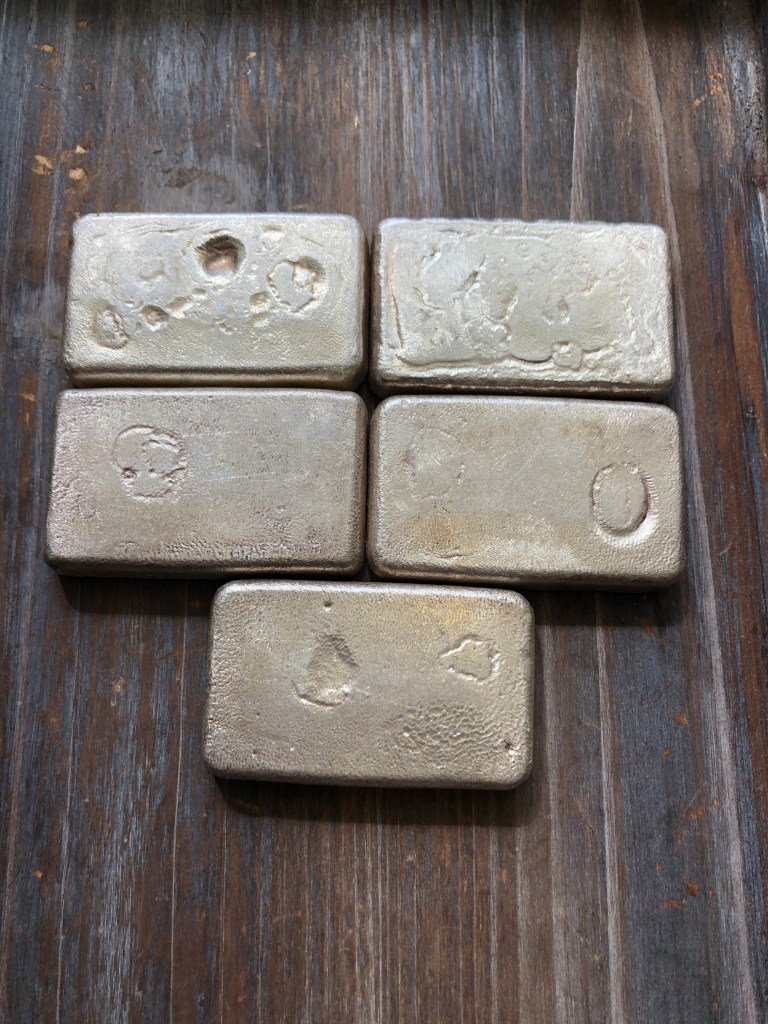
EPM was a mystery to me for quite some time, but as the hobby has grown, more and more collectors have done due diligence in finding provenance on these bars. I formerly referred to EPM bars as Empire Precious Metals, which is inaccurate. Thanks to silveringotinfo.com, this mystery has been cleared up. They posted an old advertisement confirming this is in fact Eastern Precious Metals and it was started in 1980 out of Lancaster, PA. It was affiliated with a business called Steinmetz Coins and Currency. I have a type 1 and type 2 example. There as an extruded type 3 ten oz bar that I sold a few years back.
I really like the poured example below, which I believe predates the top bar and will refer to this one as type 1 and the top example as type 2.Interesting to see some similarities on the reverse when the obverse could’t be more different. The type two appears to be machine finished versus the classic pour and bread loaf style of the type 1.
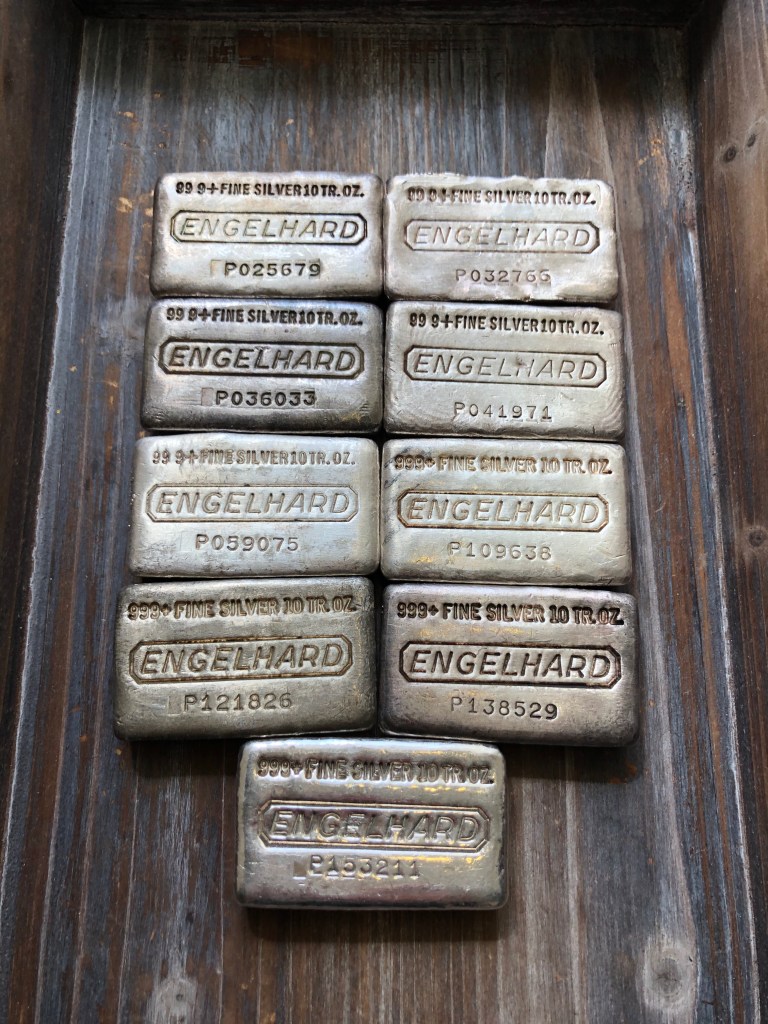
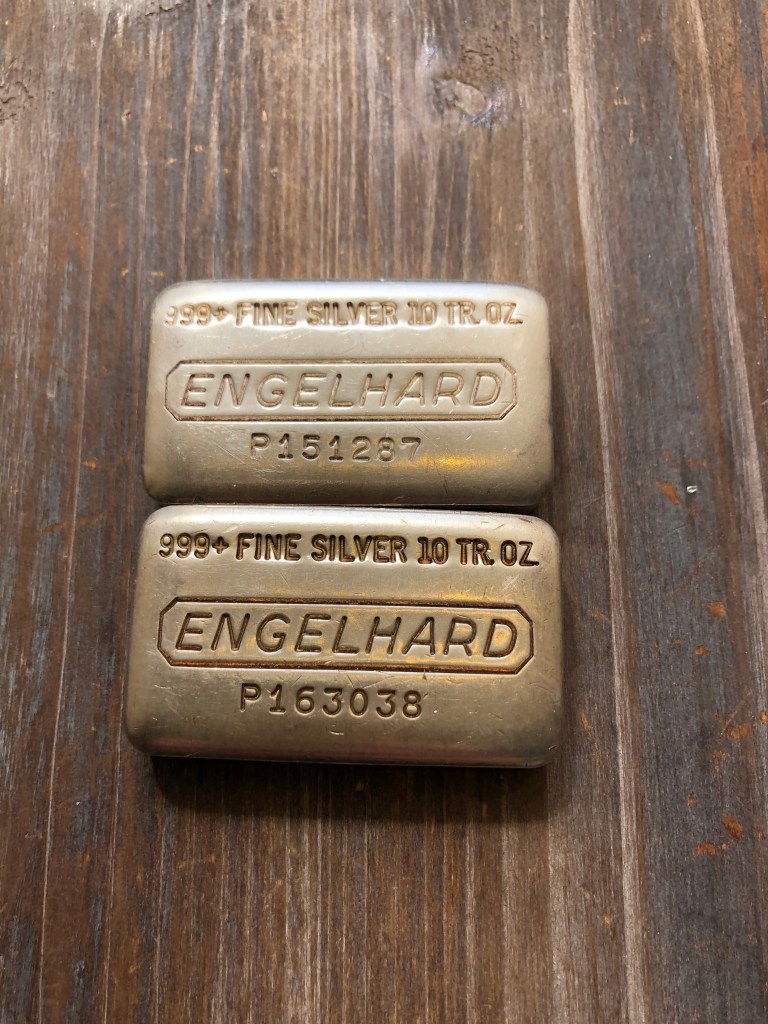
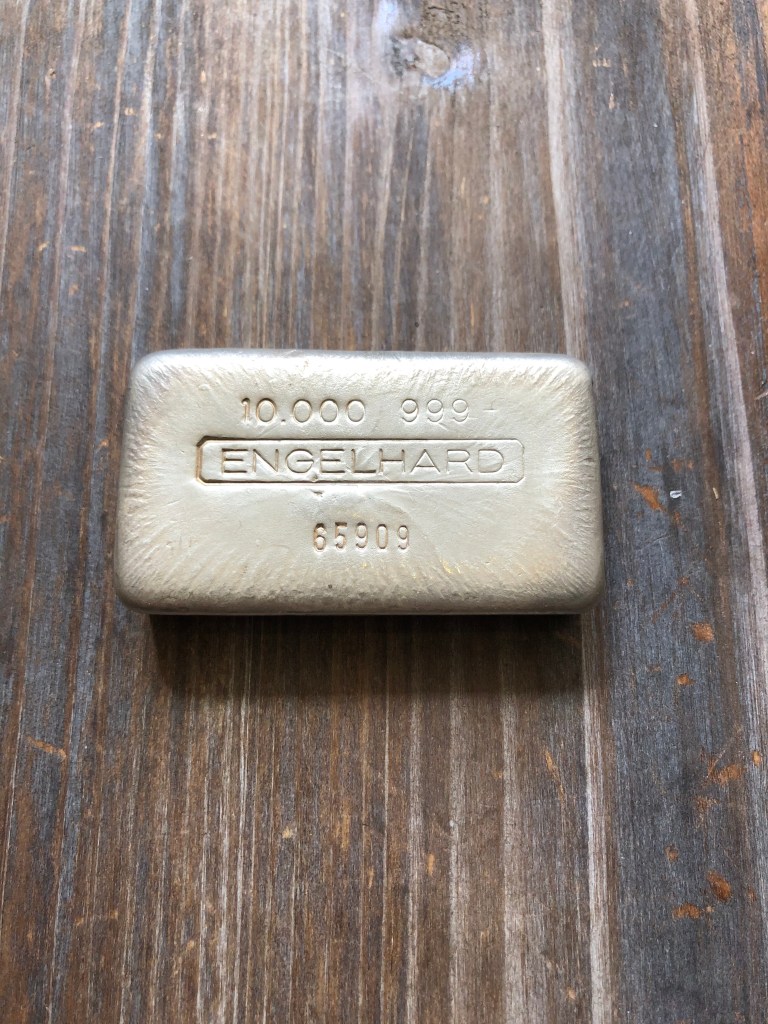
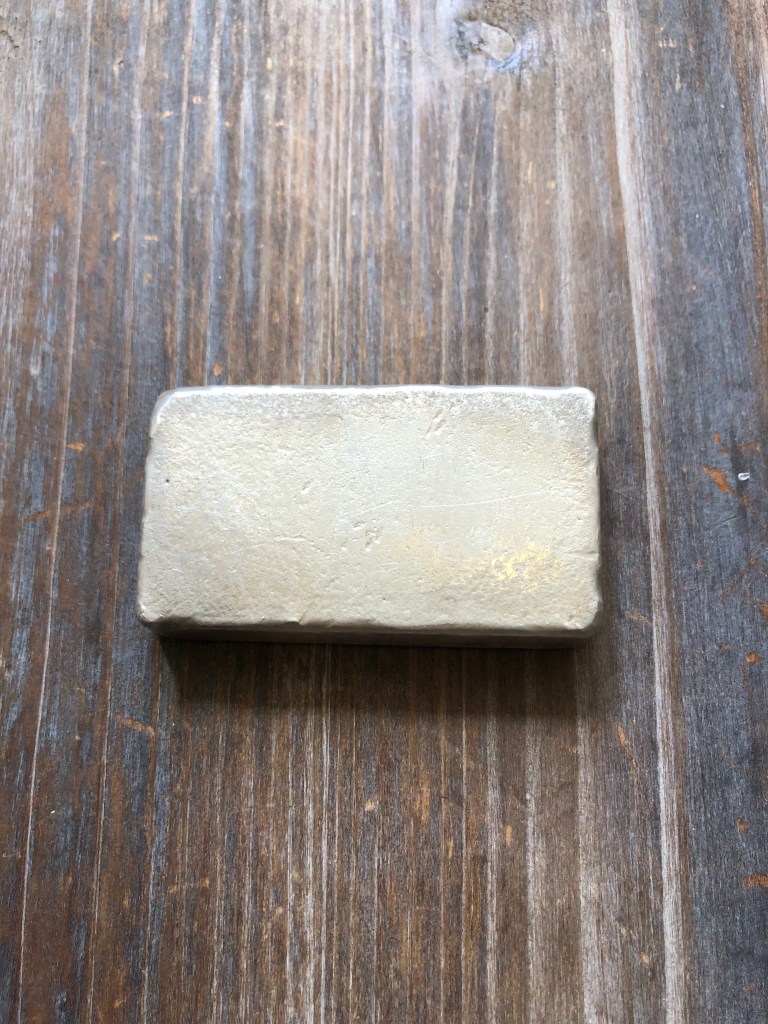
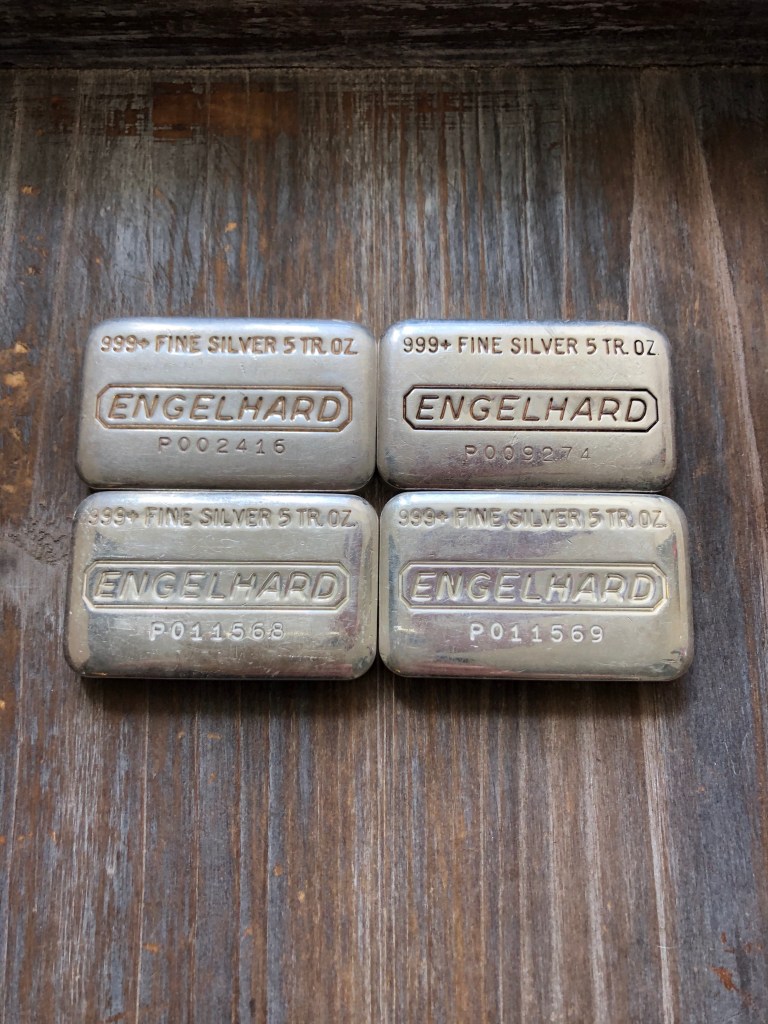
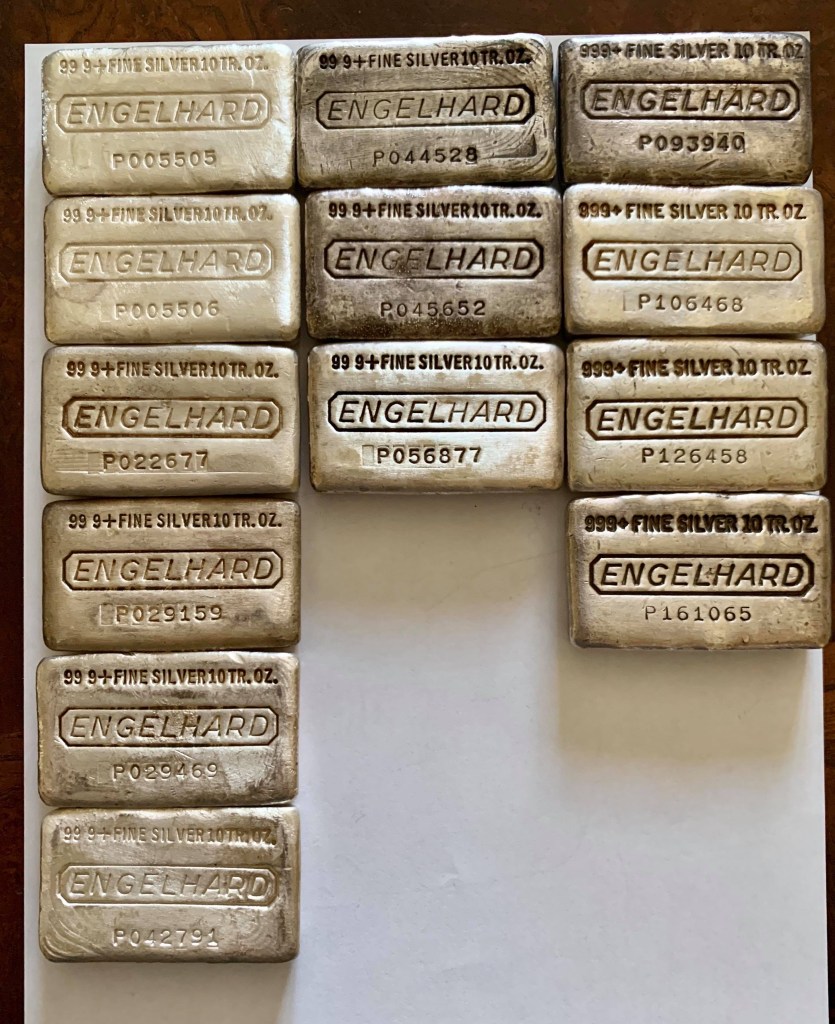
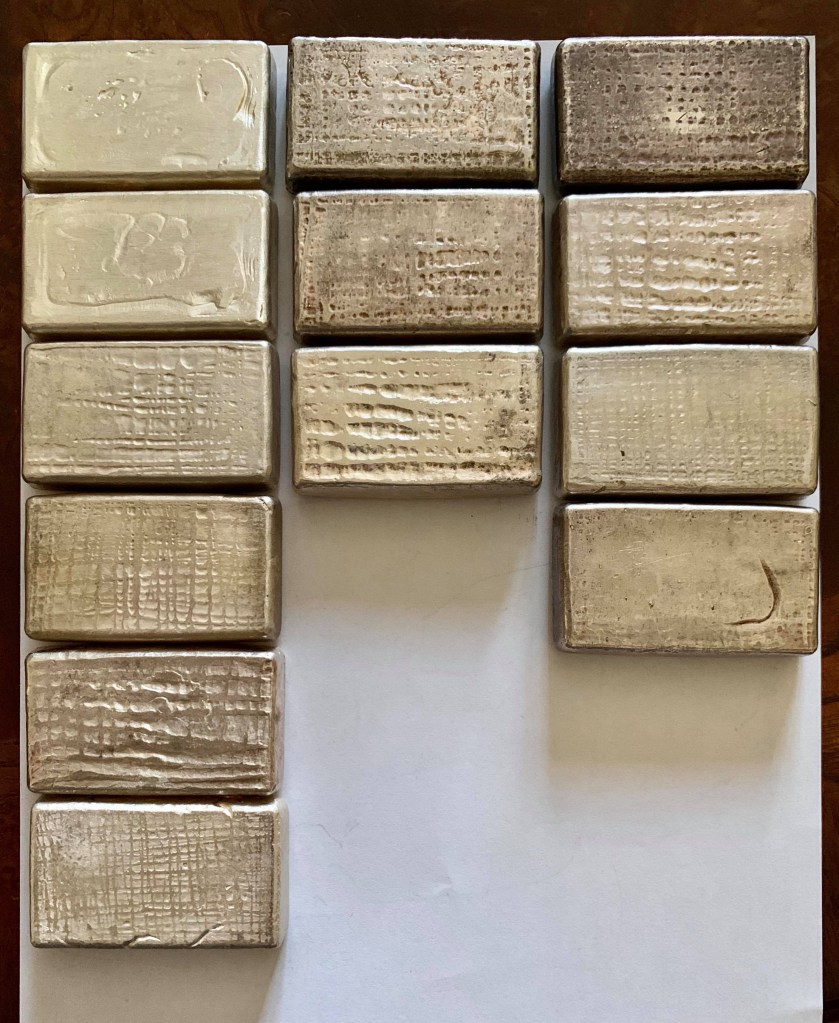
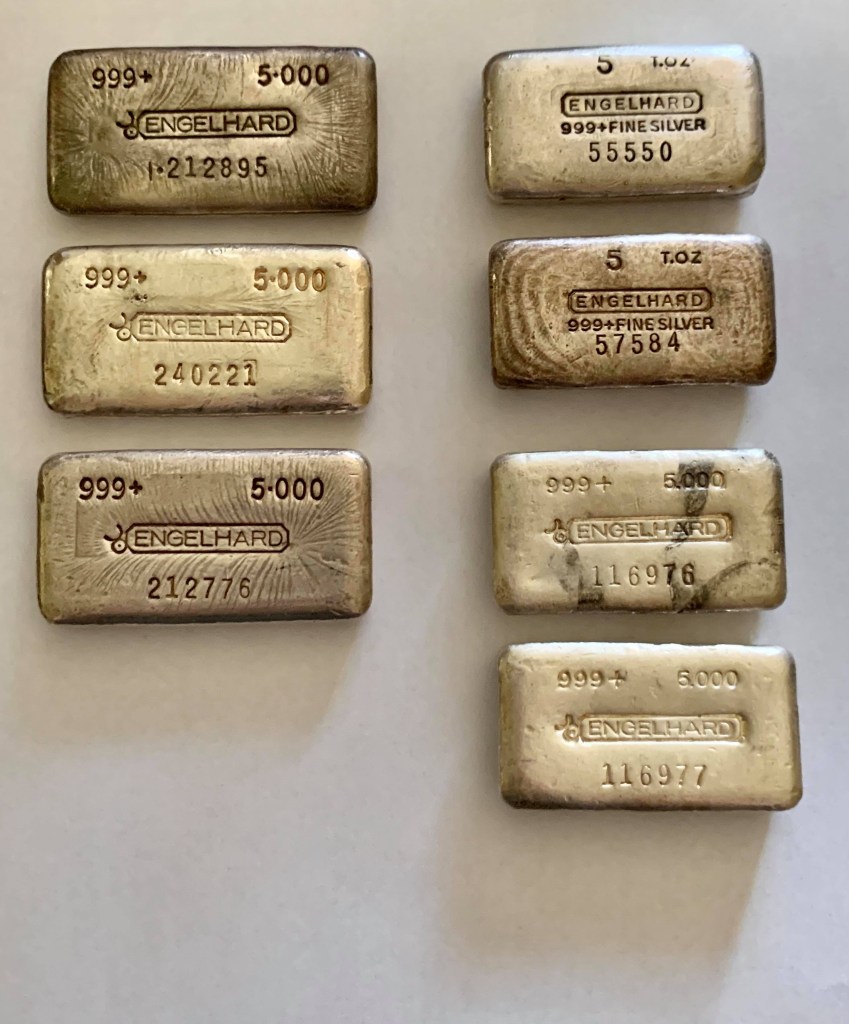
When it comes to collecting vintage silver bars, it’s hard to top Engelhard. They have been the biggest name over the years in the silver bar game and have a very large following among serious collectors. While I’m not an expert on Engelhard, there is a lot of great information available on the company, and particularly the reference site allengelhard.com, which breaks down the different sizes, varieties, estimated mintages, etc. Check out this resource if you have not already. I started slow with Engelhard, but over the years started to hoard them and believe these are value bars with fair premiums in many cases. Some can get ridiculously expense, but such is the game of supply and demand. The P series “waffle backs” are one of my favorite Engelhard bars to stack because they can still be found for premiums that don’t break the bank. With that said, these will most certainly appreciate in value as more collectors enter the market and hold these in their collections.
7th series ‘P’ serial variation and 10th series ‘P’ serial variation. These were made out of Plainville, Massachusetts in the late 70s, hence the ‘P’ serial. Estimated 50,000 were made of each, but many have not survived over the years due to being melted down, especially in 1980 during the height of the silver rush.
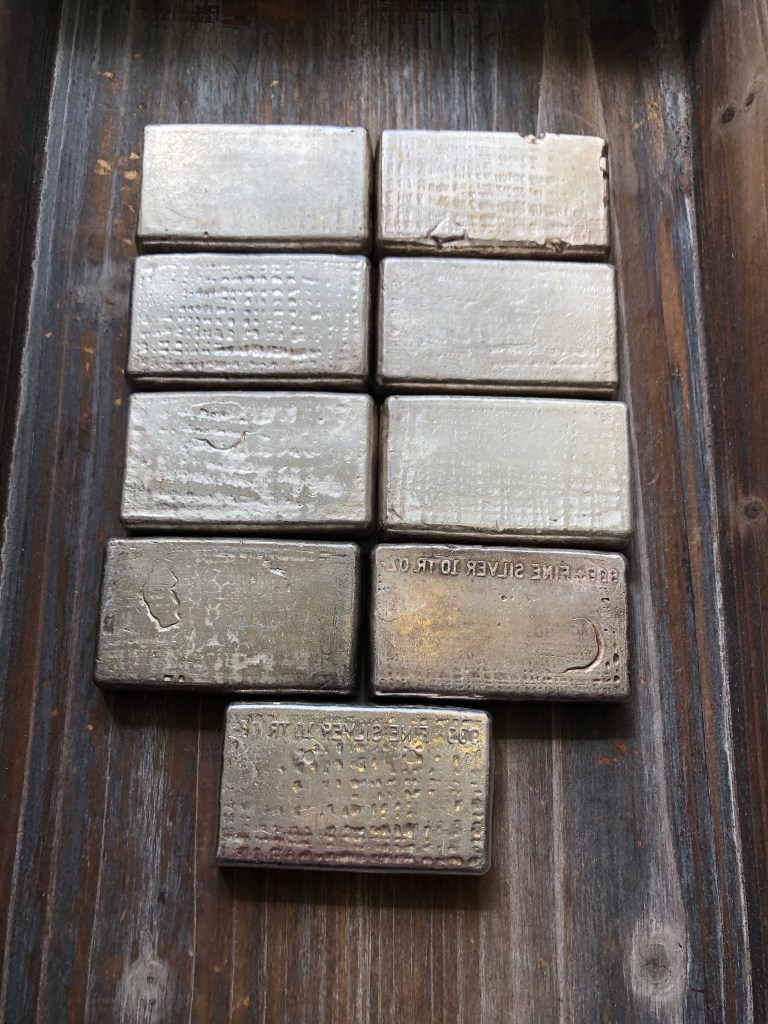
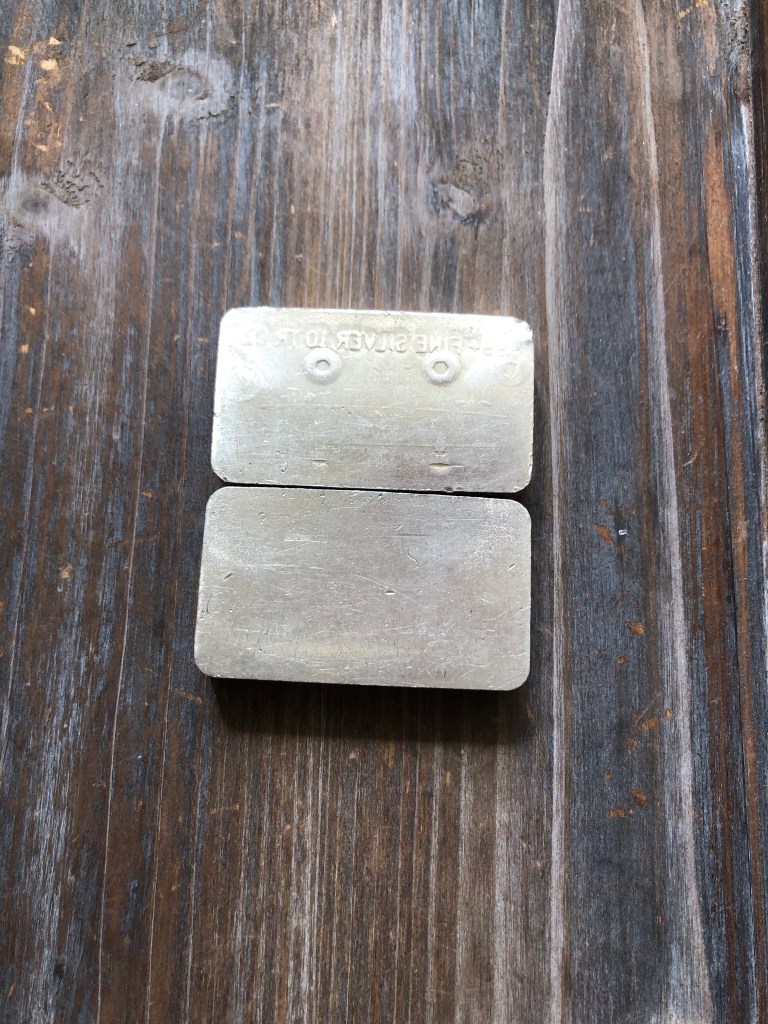
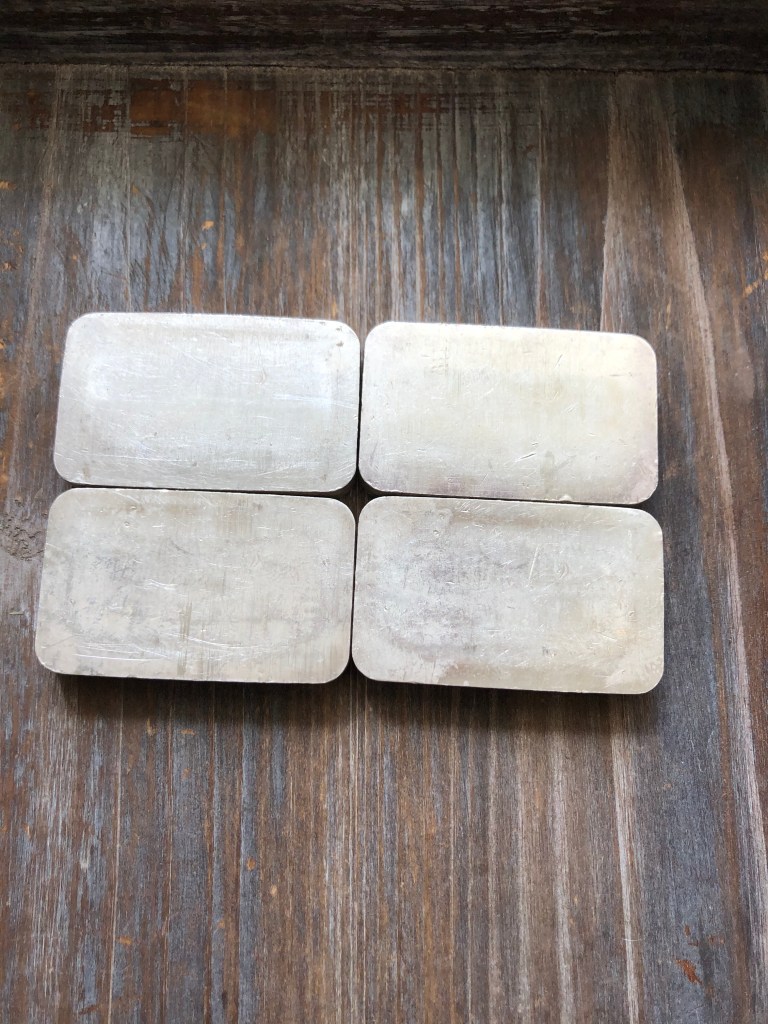
Love the waffle backs! Notice the imprint on the bar second row from bottom? This is not an error. It’s known as a reverse convex stamping impression, as sometime the belt was empty and the stamp hit the belt, leaving an impression over time, which later was reflected in the bar pictured above.
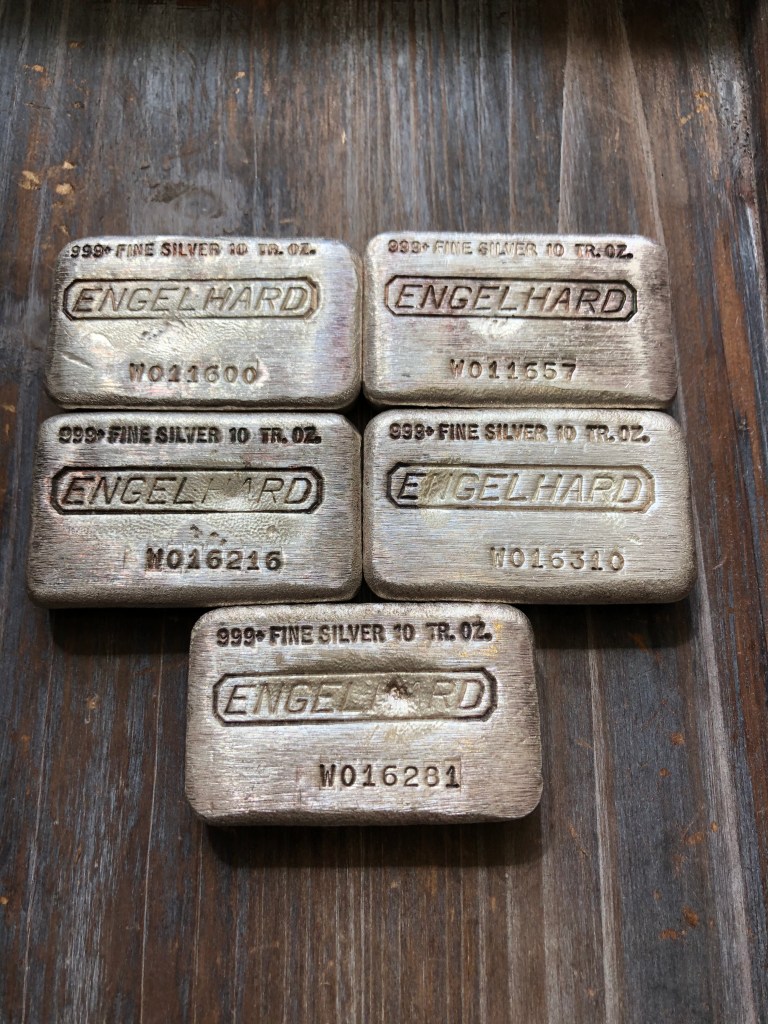
One of my personal favorites is the 9th series ‘W’ prefix Engelhard bars that were made on the West Coast out of Anaheim, CA from 1979 onward until they ceased operations there in 2000. These bars have really appreciated in value over the 6 years that I’ve been collecting. I’m really fortunate to have a nice group here.
Estimated mintage of 18,000. These just don’t come up that often anymore. Grab them while you have the opportunity to do so.Love the look and character of these bars.
It could take a lifetime to collect all the varieties that Engelhard has to offer. I’d like to share some additional varieties that I have acquired over the years.
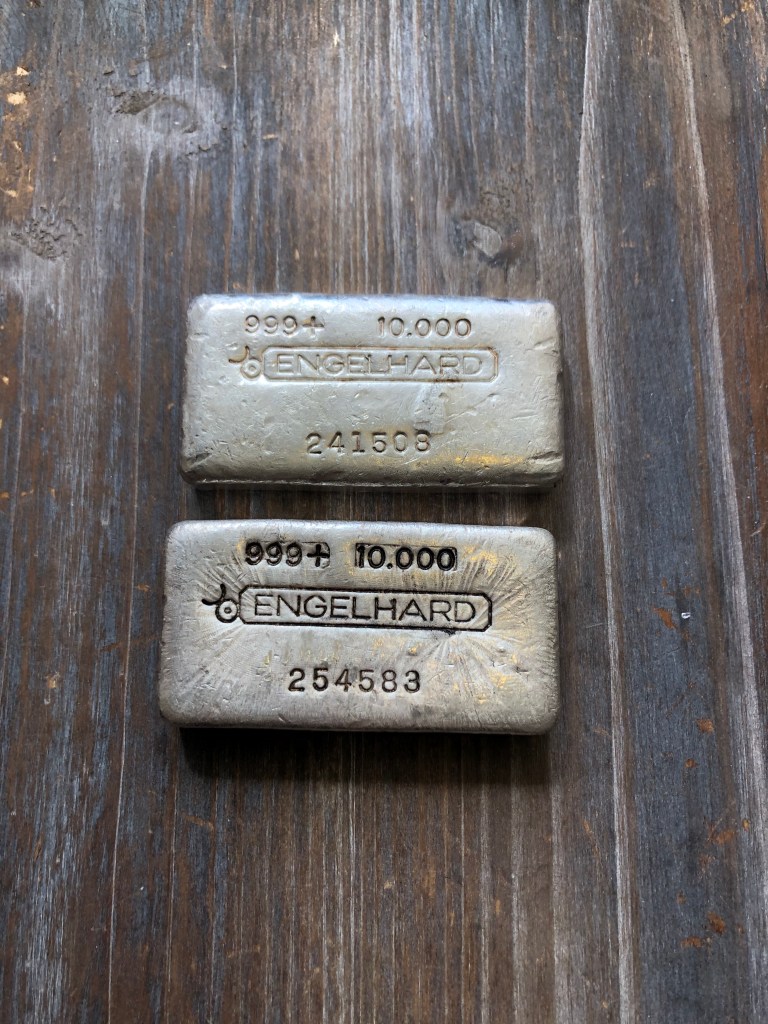
11th series in ‘P’ prefix, these are much more common with estimated 200k mintage. These are also known as “pillow top” style.Top example also has the reverse convex stamping. Cool example.3rd series 10 oz Canadian variety with bull hallmark. This series pictured was most common in Canadian variation with estimated 50k pieces made. The top bar was my first Engelhard LCS find ever and picked it up at generic prices. It was game on after this! Reverse of the 3rd series Canadian variety.3rd series in 5 digit serial variety. I’m a big fan of this bar and love not only the hallmark, but also the lines around the bar. This is sometimes known as a starburst effect. Reverse pic of the 3rd series 5 digit ingot.
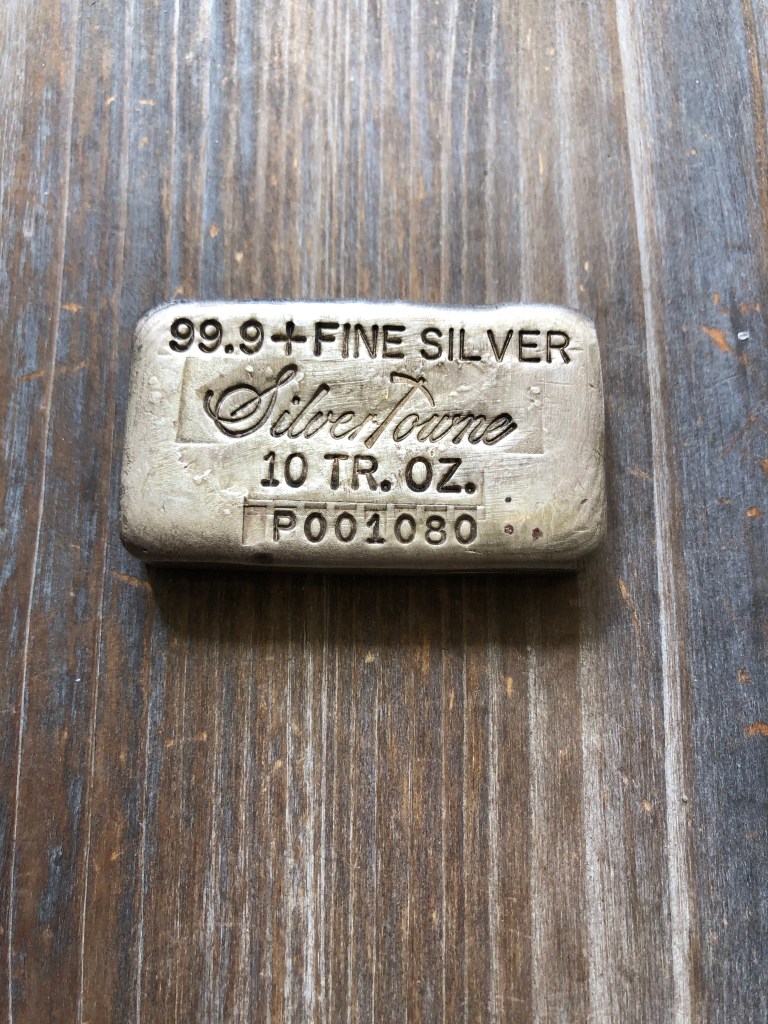
My favorite Engelhard is the rare 6th series in ‘P’ serial variety with SilverTowne counterstamp. I waited a long time to acquire one in this condition.
Absolute stunner. Incredibly hard to find them in this condition.Beautiful reverse on the “EngelTowne.”
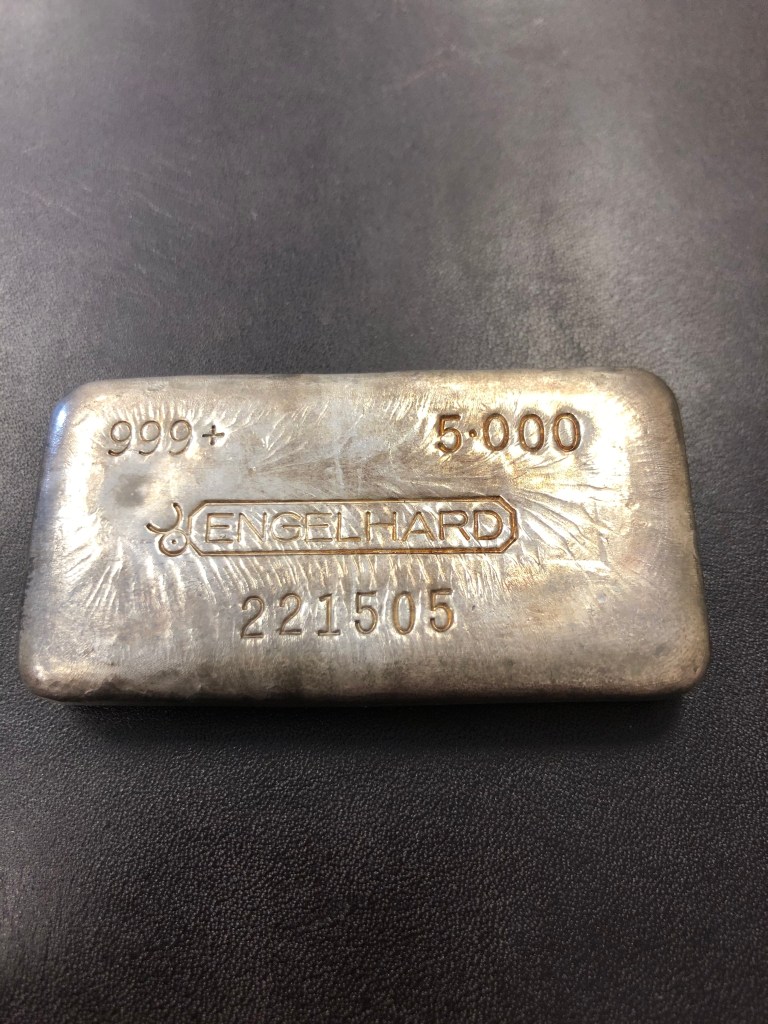
My real love is 5 oz pieces, though, and I have some nice examples, but always looking to add more Engelhard pieces in this weight class.
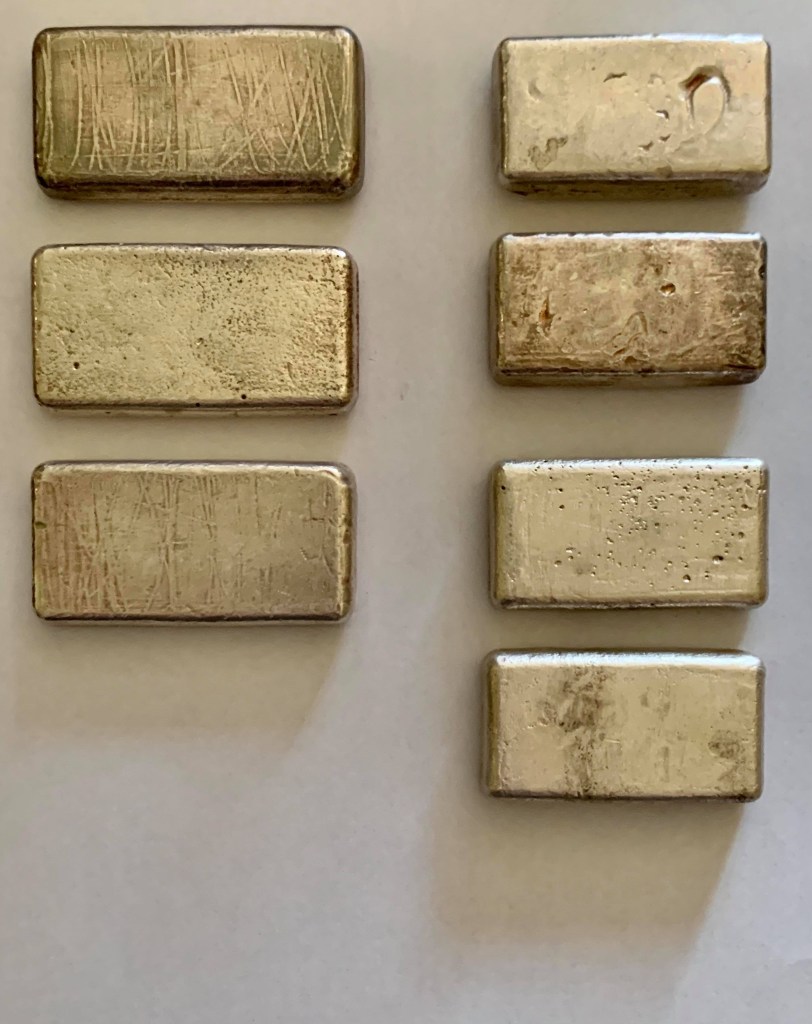
Extremely underappreciated in my opinion are the 5 oz pillow top 8th series in ‘P’ serial variety. Estimated 10k minted. I’m a huge fan. See bottom two are sequential. Not easy to come by.Smooth reverse exterior. These have a flat machined finish.
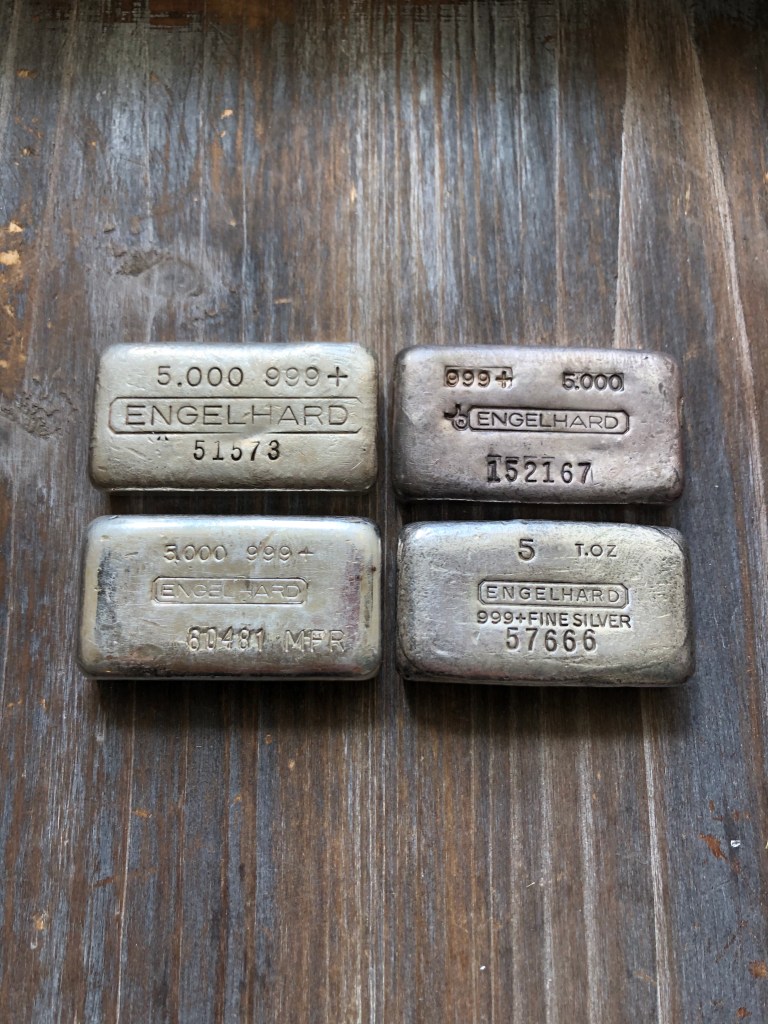
These are my rarest of the 5 oz Engelhard pieces below.
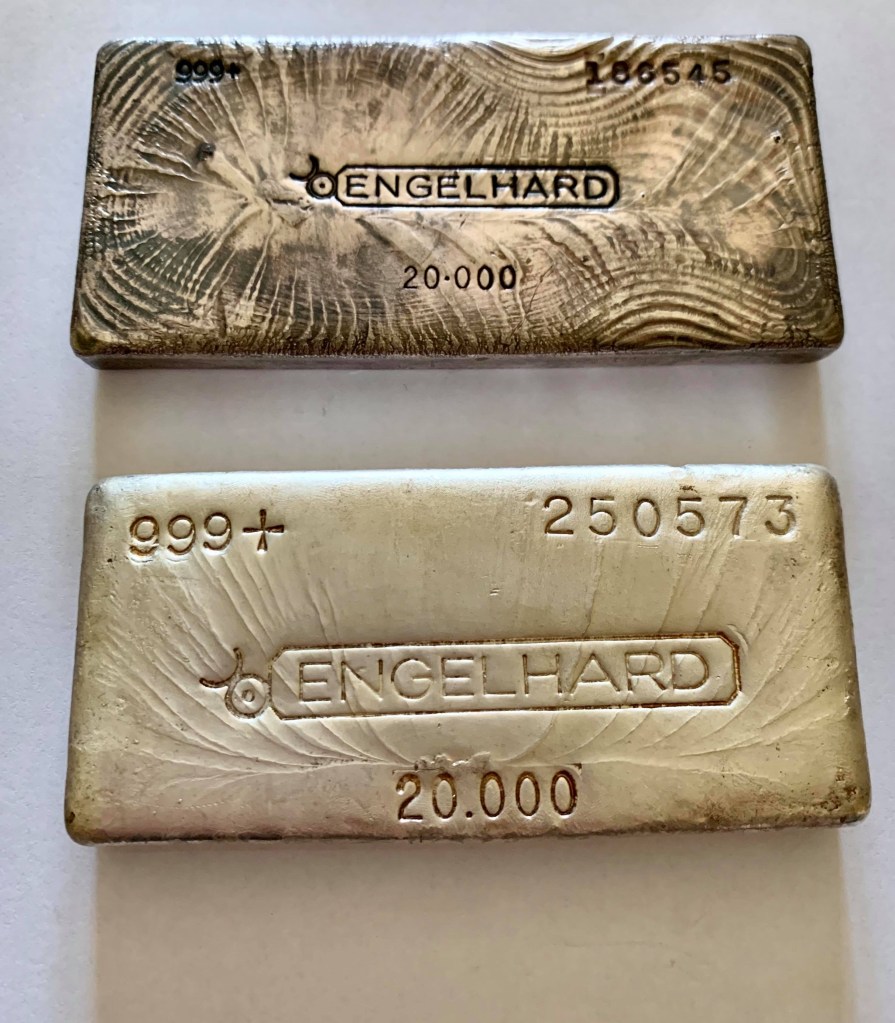
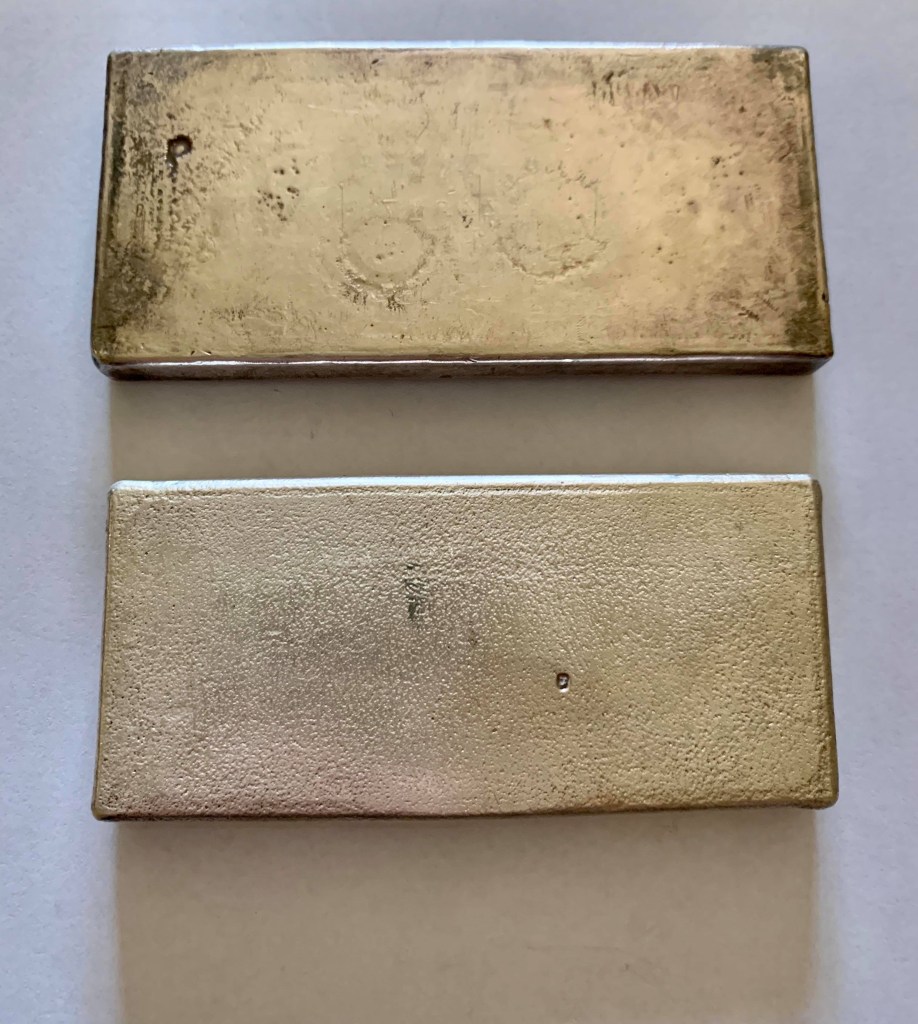
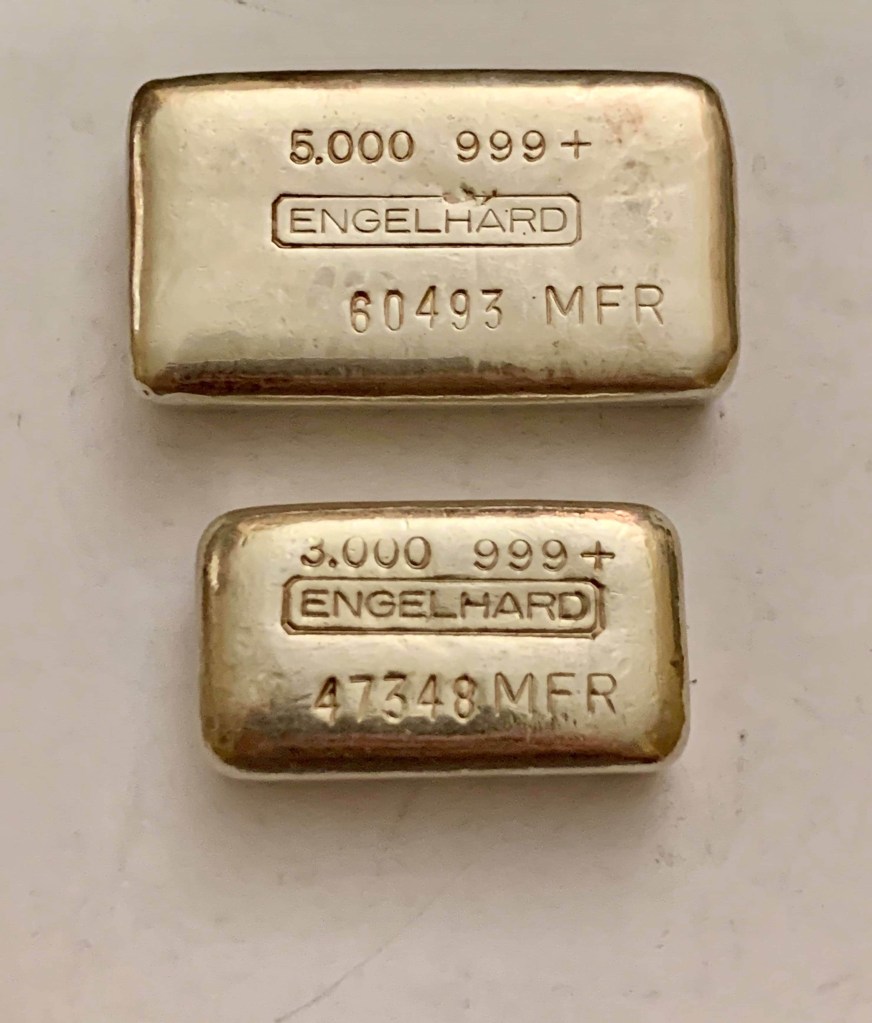
Top left is my rarest 5th series with partial X error. Estimated <100 made. Top right is a 3rd series 6 digit Canadian variety with estimated 5k mintage. Bottom right is 4th series in ‘MFR’ (Metals Fabrication & Refining) variety with estimated 700 made. Bottom right is 7th series ‘T.OZ’ with estimated 4k mintage. Reverse of the 5 oz ingots above.
Hope you enjoyed these. I’ll be added a few more in the near future to this blog post.
Happy to add some more updates today on 6/4/20. My friend and fellow collector Brian R. has a very impressive Engelhard collections. Below are pictures of his Engelhard ingots.
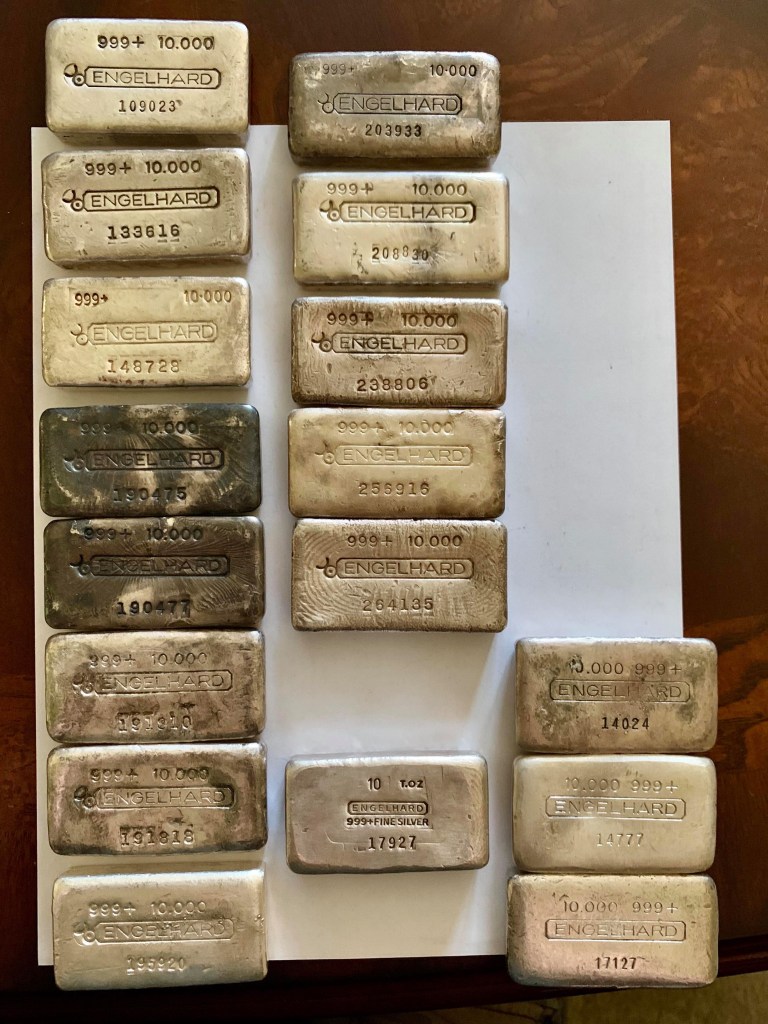
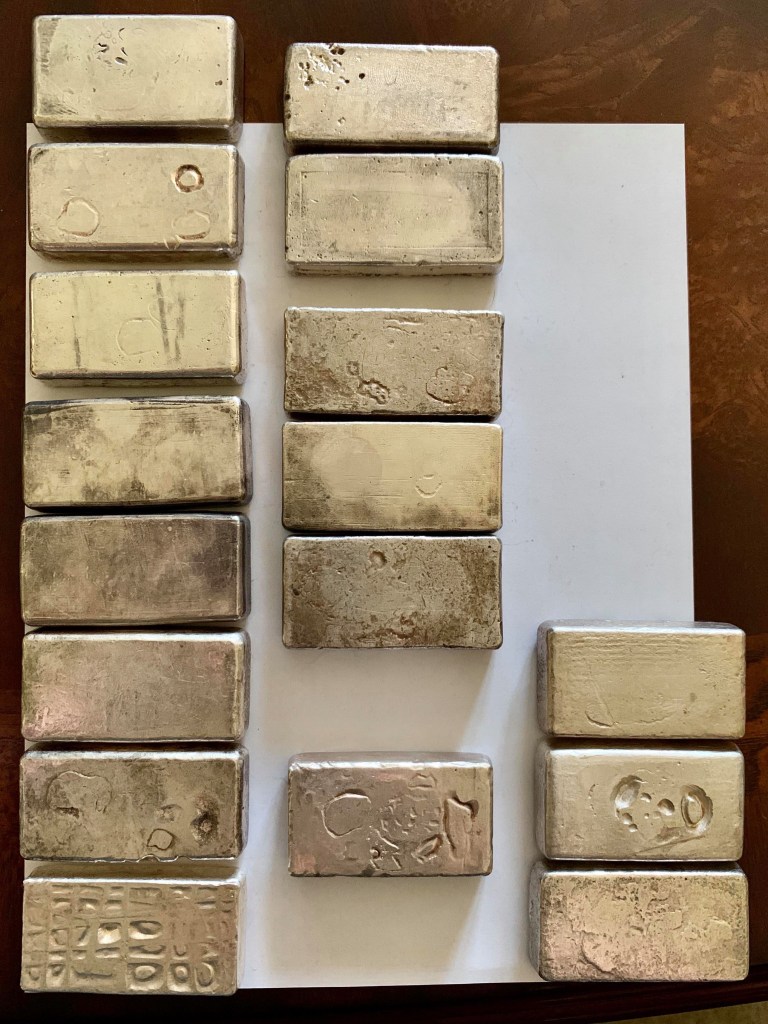
And I thought I had a lot of P series wafflebacks!Beautiful!Massive collection of 10 oz Canadian with and nice 10 oz T.oz and 3 nice 3rd series 5 digit Engels.Check out the waffling on bottom left and notice a picture frame characteristic on the middle row second from top. These are phenomenal.Fantastic assortment of 5 oz class.Just look at left top and bottom ingot. My goodness.Couple of scarce 3 oz ingots!Bad ass 20 oz Engels. The top one is a Zebra. Sic!Reverse of the 20 oz Engels.Stunning pair of MFR Engels from Brian R’s collection.Recent addition of a stunning 5 oz Canadian 7th series variety. Love the lines and quality of the hallmark. Perfect stamp.Very clean reverse. Great example.
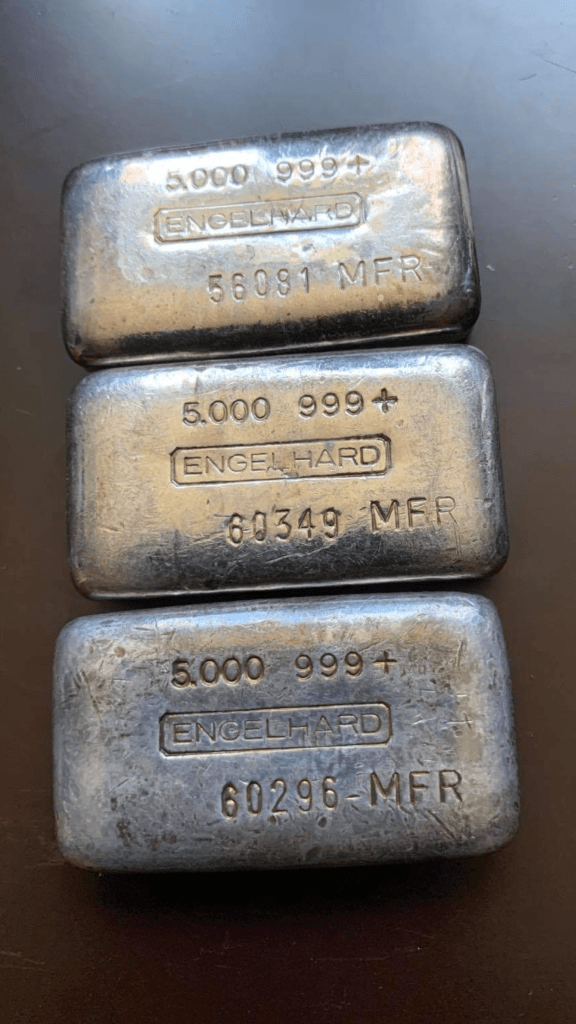
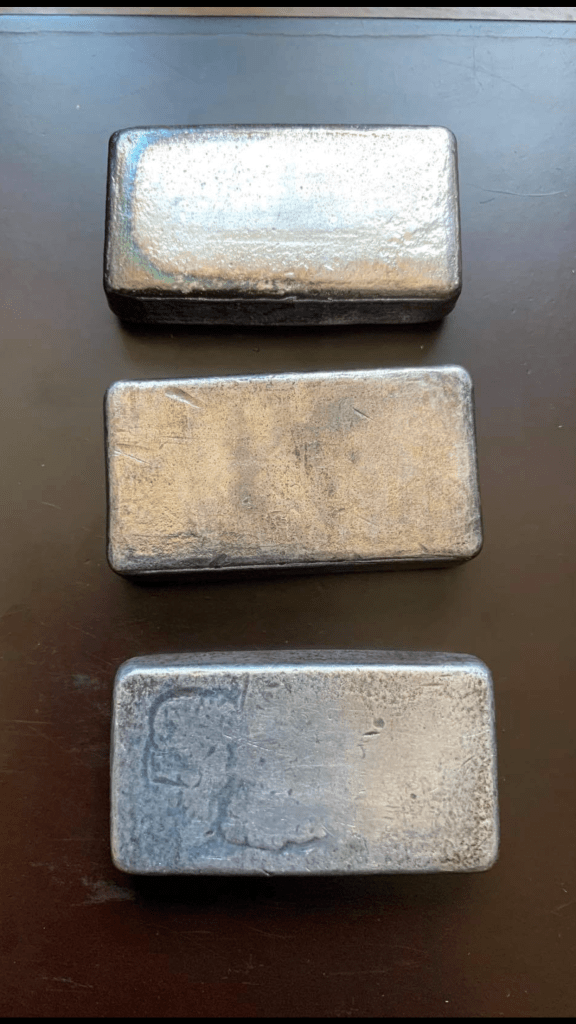
Here are a trio of 5 oz class Engelhard MFR ingots shared by Prashant K.
These are fantastic!Check out the rainbow toning on top left ingot!
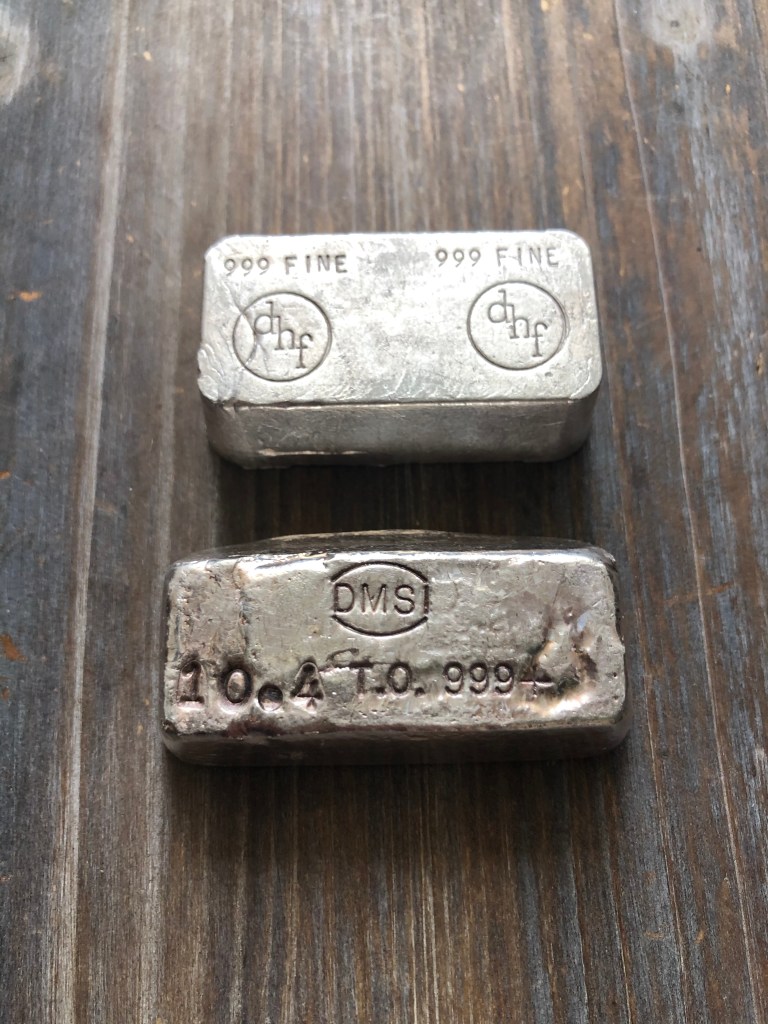
To round out the “D” box, we have a few notable refiners to share. DHF has been in operation for many years and operate on the West Coast with offices in Southern and Northern California. They still operate today, but have not poured bars for the retail market for quite some time to my knowledge. The example shown below is consistent with 70s era characteristics.
DMSI is another that you don’t often see. I have seen examples in 5 and 10 oz class, but not a lot of available information on this refiner. It’s a classic old pour style and very collectible.
The double hallmark DHF is a rarity. I’ve only seen one other in all my time collecting.Reverse pics of the DHF and DMSI pours.
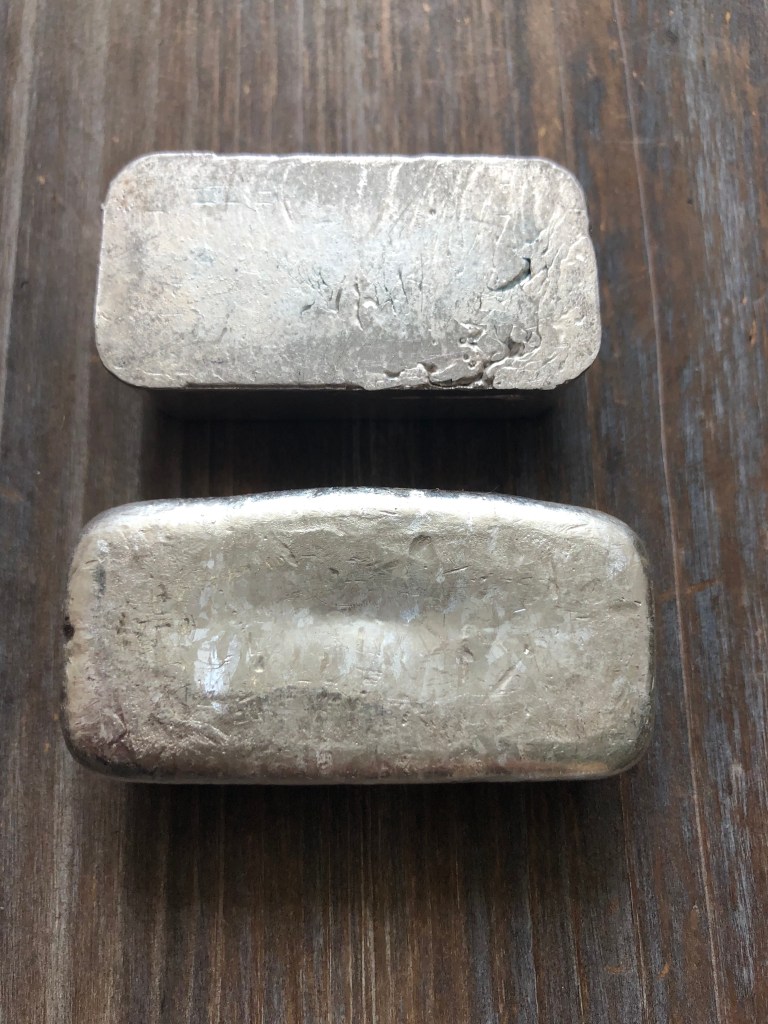
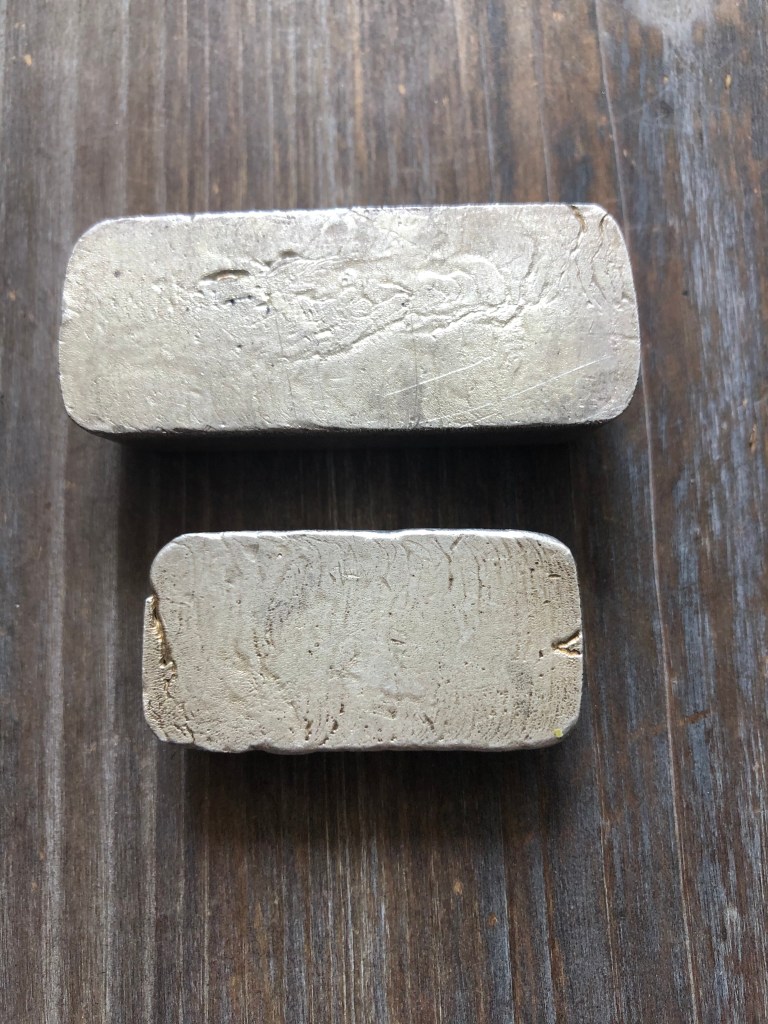
Doral is an old New York operation that has been around since 1972 and still in business out of Freeport, NY. They are a family owned and operated business providing full service precious metals refining nationwide. To my knowledge they no longer pour silver bars, nor have they for quite awhile. They do, however, still pour gold bars. Here is a 5 and 10 oz example. These are quite scarce and highly collectible.
Really love the look and satin finish on these. Beautifully done.The reverse fo the 5 oz is gnarly. Love it.
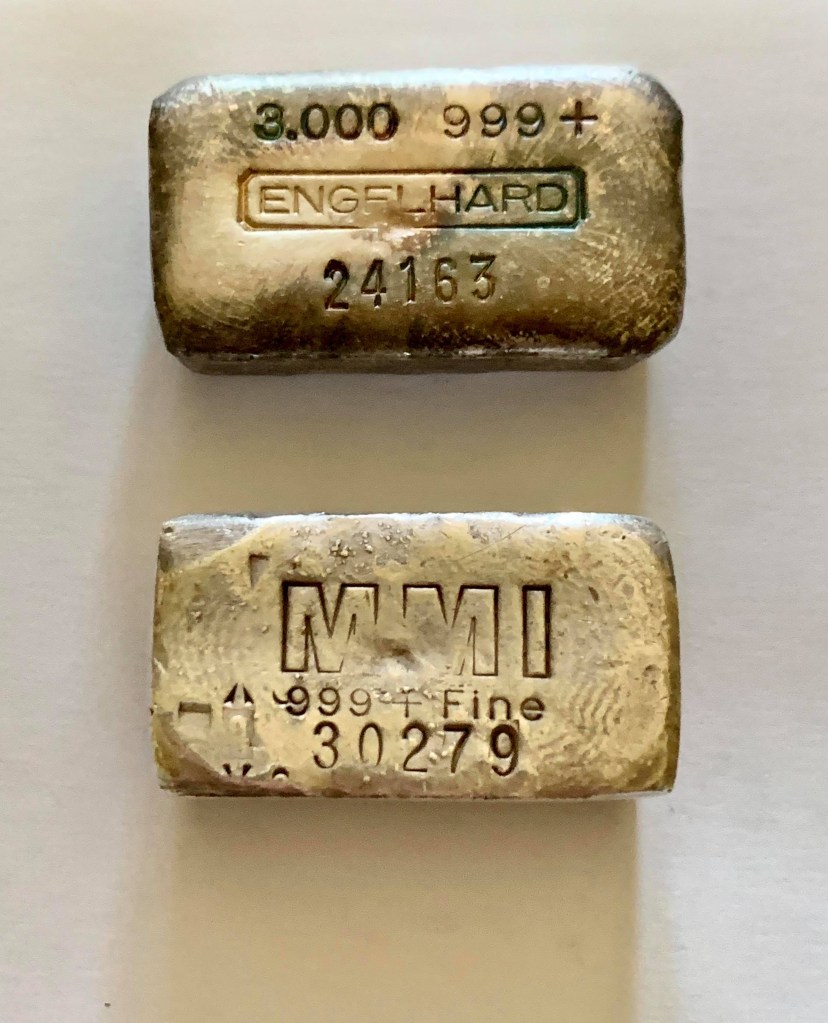
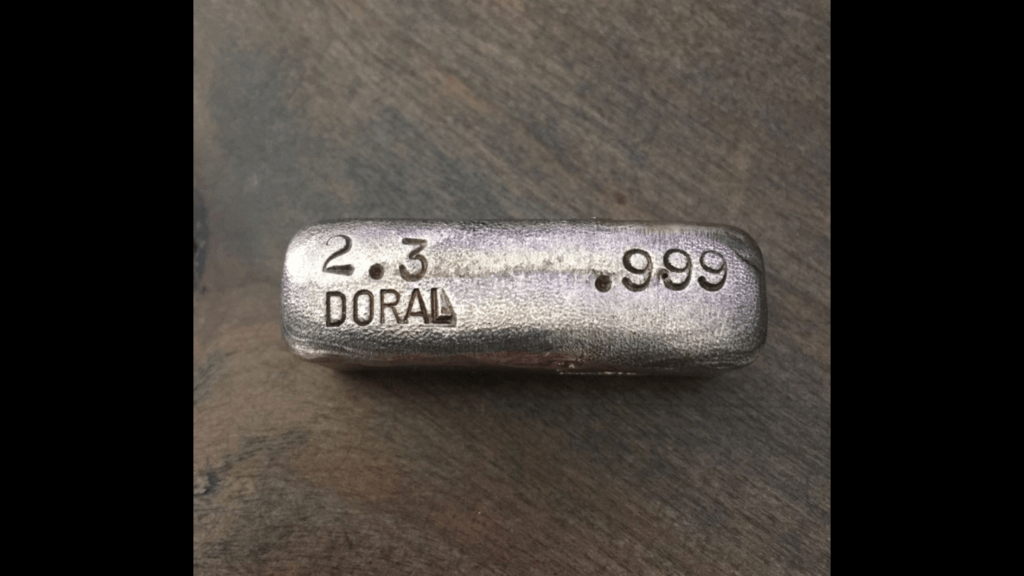
There are a few smaller bars that exist, but they are extremely rare and sought after. I’m fortunate to have a 2+ oz example to share here.
This is one of my very favorite small bars and the toning is exceptional. Side view of the ingot. Great layers and the color!Reverse. Hard not to love this little guy.
Doyle’s Mint has always been a highly popular old refiner among collectors. Not a lot of information available, but believed to be out of Southern California circa 70’s-early 80s. The iconic Lion hallmark is one of the more distinguished hallmarks you will come across. They don’t come up often and when they do, they get snapped up quickly. They came in 5, 10 and 25 oz variety. Here are a few examples of Doyle’s Mint pieces from my collection.
These hallmarks are particularly strong. Many of the pieces have lost the definition of the Lion with age and wear.Nice character on reverse of both pieces.
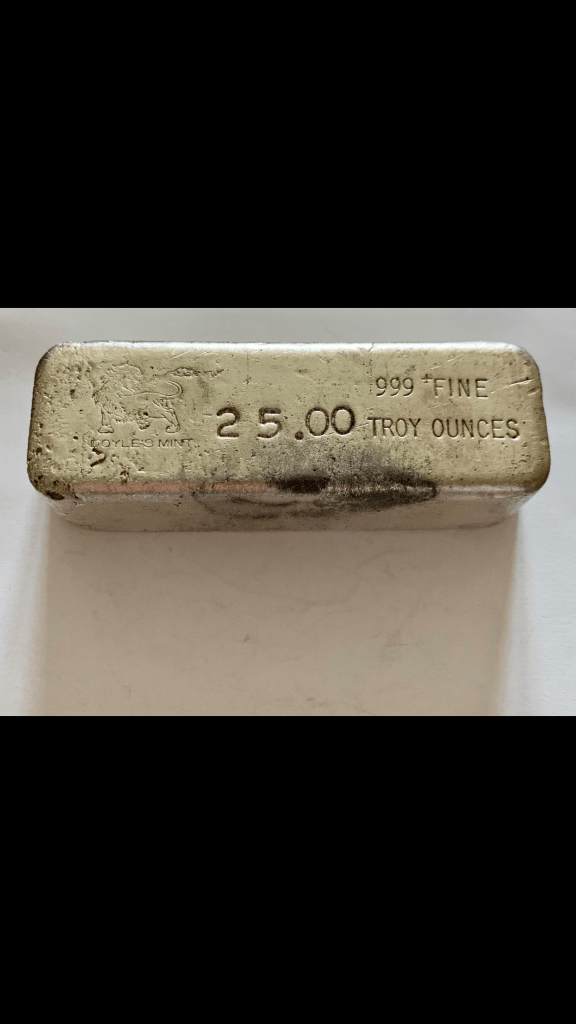
And here is a 25 oz example from Brian R’s collection.
Even 25 oz. Many in this class are odd weights.Reverse of 25 oz.
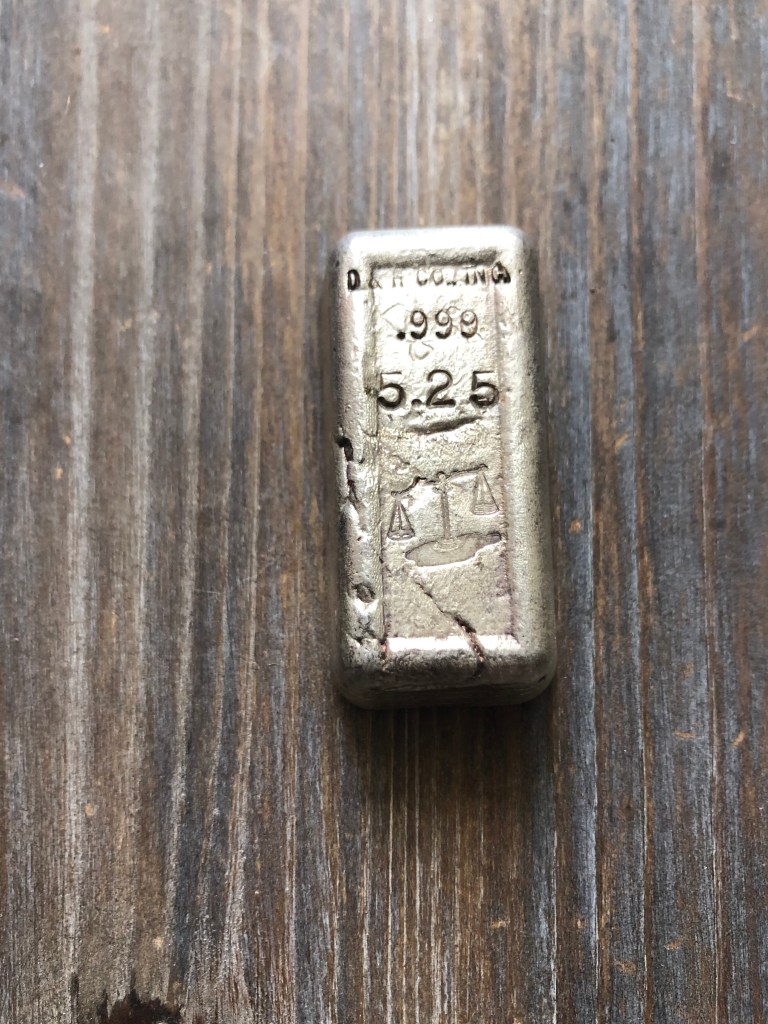
Dugan & Helterbrand operated out of Marshfield, Missouri from 1980 until 1991. They were a precious metals recycling business and the ingots that have survived have become very sought after. Their ingots are known for the “Scales” hallmark that was used by other notable companies like United States Smelting and Refining and David C Davis. Some of the pieces had picture frame molds and others more traditional molds without picture frame. I only have one D&H piece having traded my other away, which I miss dearly.
Very nice example with clear hallmark, excellent stamp. Most of these pieces were odd weights an most carry the D&H CO INC stamp at top.Killer pour lines on the reverse. This ingot is in fantastic condition considering it’s age.
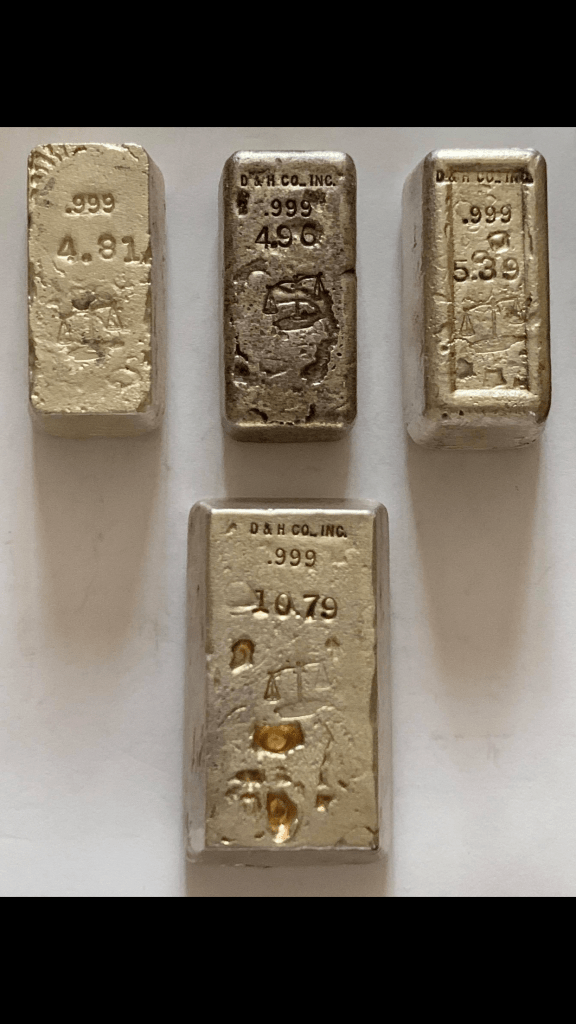
I’m please to share a very nice D&H collection from Brian R. below. He has some spectacular pieces in different varieties and sizes.
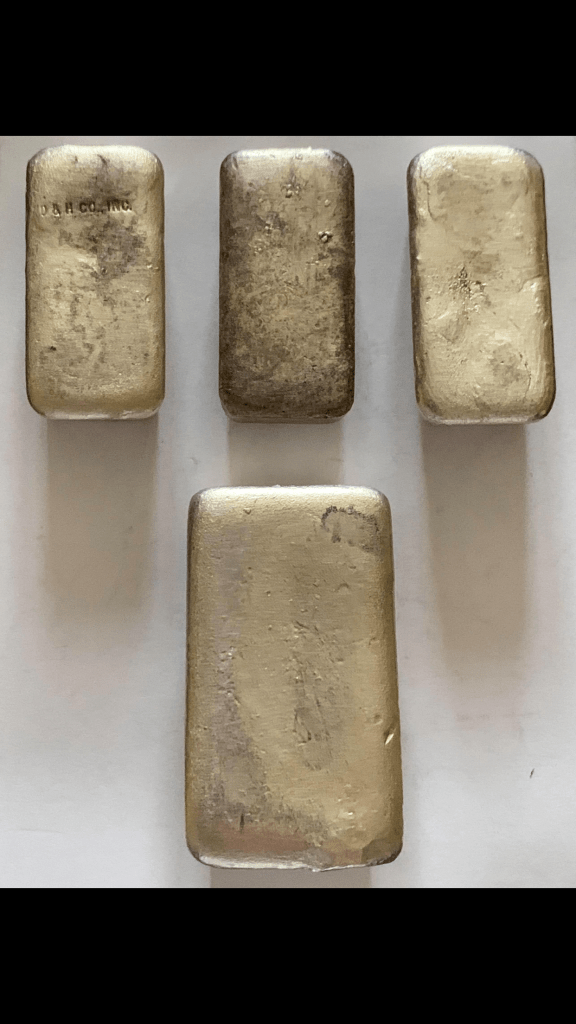
Something you don’t see in one place, 3 different varieties of 5 oz class above. Type 1 on far left and two varieties of type 2 5 oz D&H center and right. Just an awesome trio! The 10 oz is also special. Great condition of ingot with golden toning in the air pockets of the pour on obverse.Notice top ingot on left has D&H stamp on reverse. This is clearly an older variety that we can refer to as type 1.
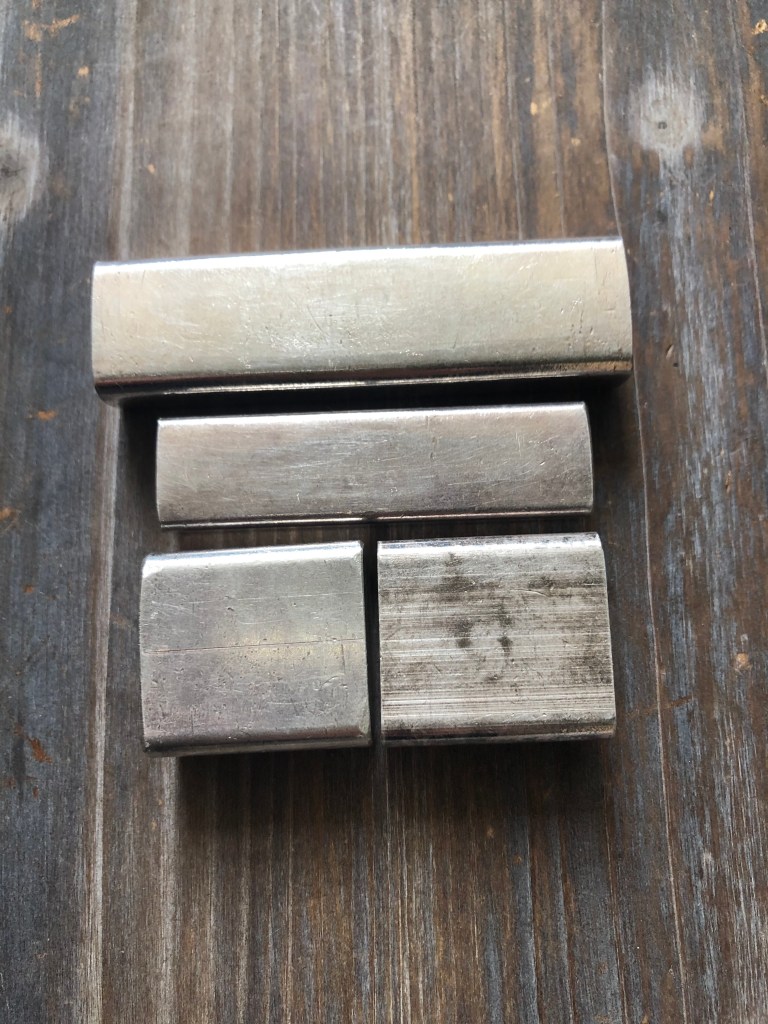
There are niches within collecting vintage silver bars, and collecting extruded bars, particularly kit kat style extruded bars has become a very popular niche within the hobby. The first kit kat bar I ever owned was a California Crown Mint, but the DURO was always the one at the top of my list. There just are not a whole lot of them that have survived. There is not a lot of information on DURO, but they came in 5, 10, 25, and 50 oz sizes. I have yet to see a 100 oz, so not sure they went beyond 50. Here’s my Duro collection for your enjoyment.
The stubby 5 oz pictured at bottom are exceptionally rare and carry a far higher premium. If you come across any, I’m looking to add more to the collection :).
I believe the stubby 5 oz predated the traditional 5 and 10. It’s not proven, just a hunch. The style is much different, slightly more primitive and I mean that in a good way. The hallmark is different with no outlines on the letters or shape enclosing the hallmark. 5 F.T.O. and .999 on the stubby, as well as LOT are different. I have also come across a few images of 10 oz DUROs that had the same style of hallmark and weight/purity stamps with LOT. Again, I believe these were produced in very limited numbers before changing the style to the type 2 five and ten oz that I have pictured at top in the image above.
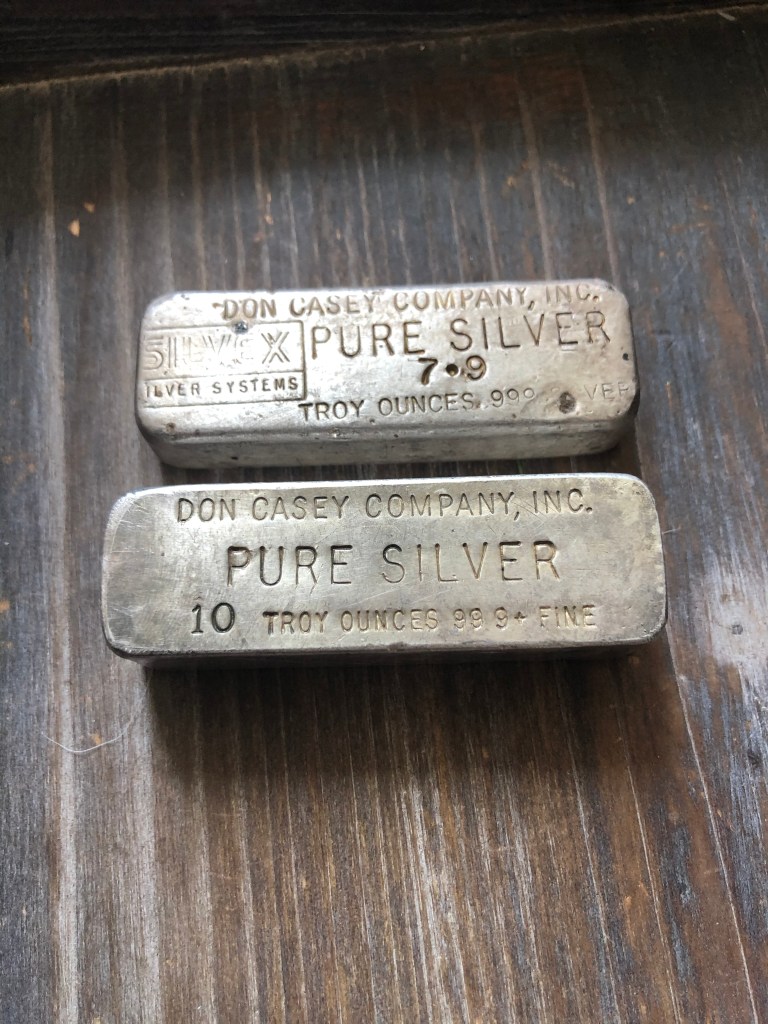
There were many refiners in Texas back in the day, but only a handful stand out, Don Casey being one of those. The company started in the early 70’s out of Garland, Texas. He later integrated Silvex Silver Systems into the operation and I’m pleased to share examples of Don Casey bars and bars that have the Silvex Silver Systems counterstamp. Typically the the bars with the Silvex Silver Systems counterstamp are more scarce. Regardless, premiums on Don Casey pieces have gone up significantly over the last several years.
The lighting could have been better on top example. The Silvex is actually quite visible, but my photo didn’t come out perfect. 7.9 is a very unique weight on these. Can’t say I’ve seen another 7 oz oddweight.Some nice gold toning in the pour cracks on the 7.9 oz.
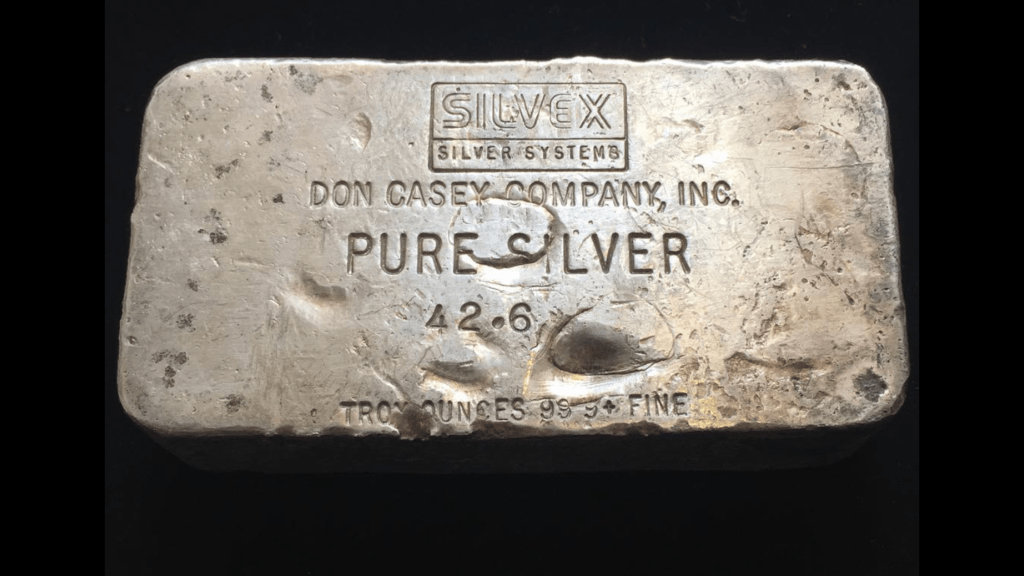
Here is a big boy that I formerly owned. I miss this piece.
One of the coolest large pieces I previously owned. Really great example of a scarce larger sized Don Casey with Silvex Silver Systems stamp.
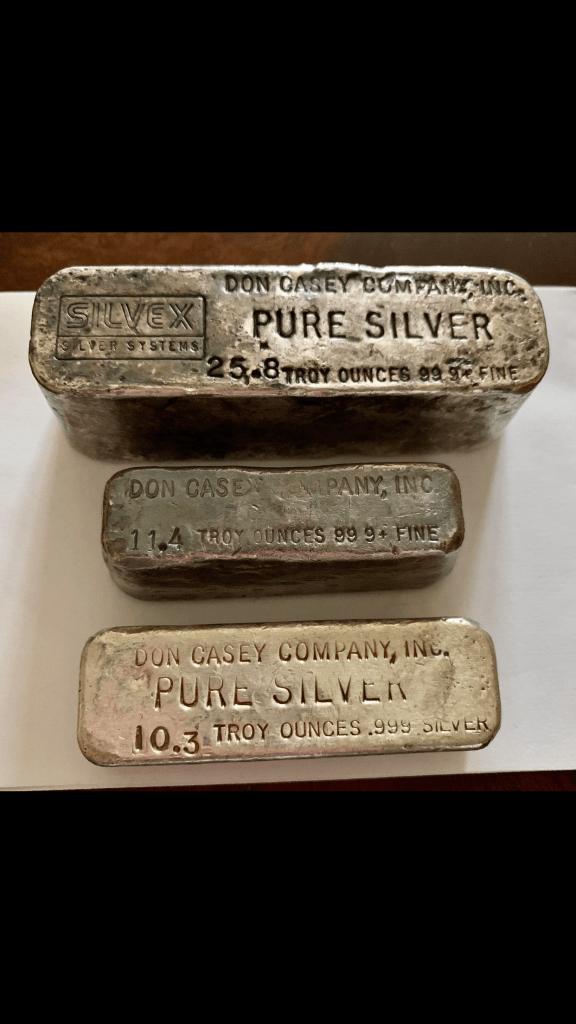
We have a few more excellent example to share from Brian R. Enjoy!
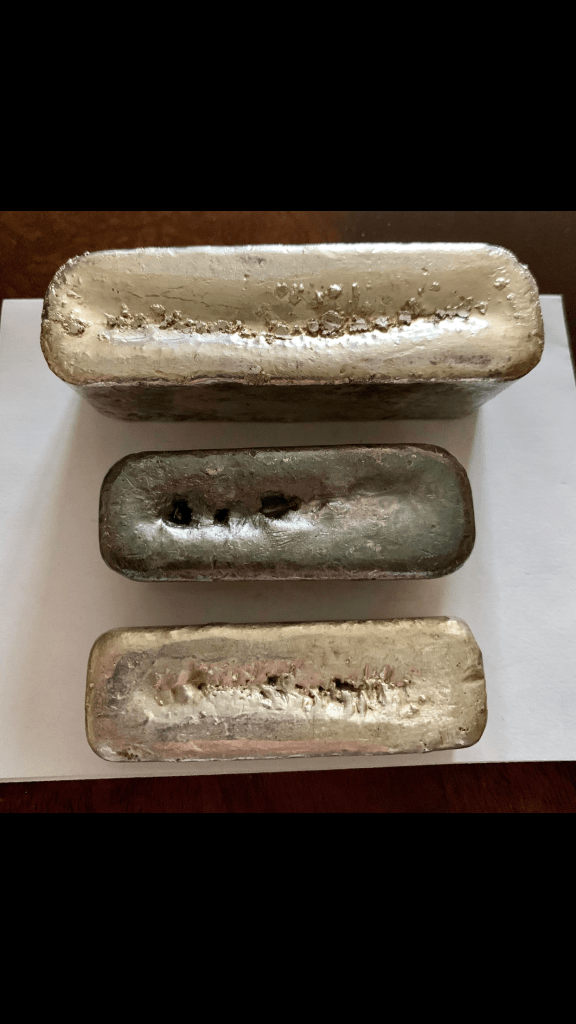
Three fantastic examples and different varieties versus the first two above. Look at the differences on the 10 oz class bars from both pics. The toning on that middle 11 oz odd weight bar is amazing.
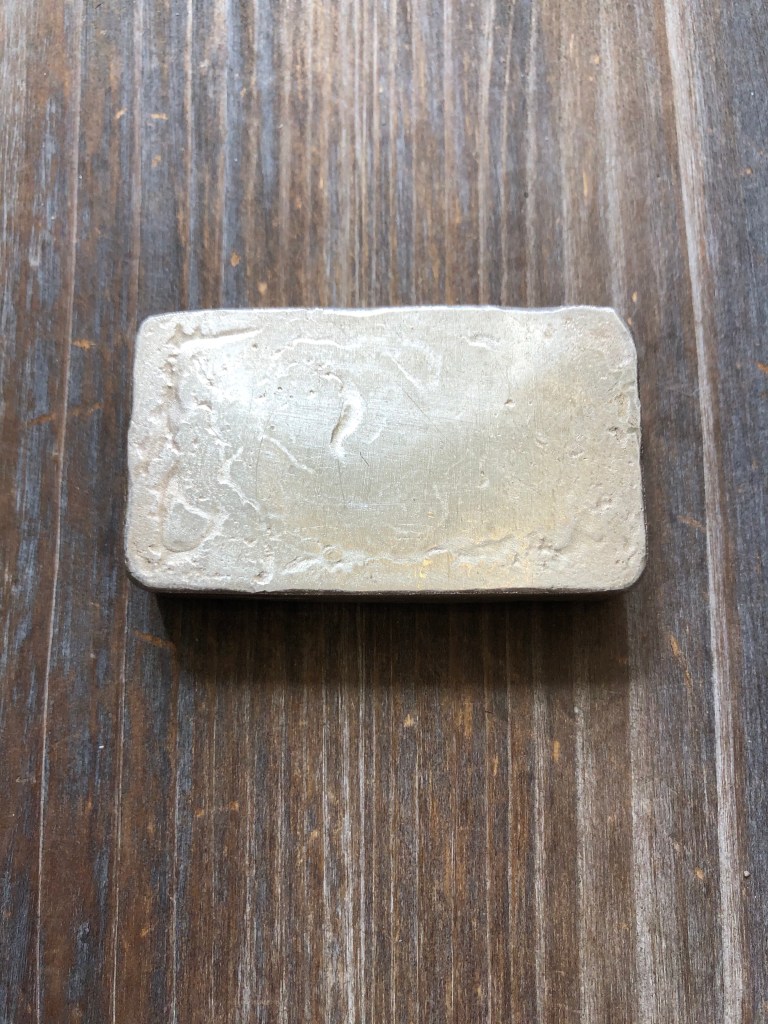
Here is a recent addition to the Don Casey post that was sent in on 3/14/21 by collector John G. Thank you for sharing this great piece.











 Vintage Silver Bars